Honda S2000: The VTEC Roadster That Screams at 9,000 RPM

Specifications
Basic Information
Performance & Value
The Ultimate Birthday Gift from Honda
Genesis: A Blank Check for the Engineers
The S2000’s story begins like a dream for any automotive enthusiast. The late 90s were approaching, and Honda was preparing to celebrate its 50th anniversary. To mark this half-century in the most spectacular way, management made an exceptional decision: giving their engineers a blank check—notably under the leadership of Shigeru Uehara, the “father” of the NSX and the Integra Type R—to design the ultimate sports car, without any real constraints of shared production.
This is how the idea for the S2000 sprouted. Unlike most automakers who start with a mass-market sedan platform and rebody it into a convertible, the Honda team started from a completely blank sheet. They developed an exclusive chassis (the famous “High X-Bone Frame”) for maximum rigidity, a front mid-engine rear-wheel-drive layout, and an engine block developed solely for it. The S2000 was not designed by marketing specialists, but by powertrain engineers and test drivers driven by the desire to honor Soichiro Honda’s legacy of technological excellence. This explains its radical and uncompromising character.
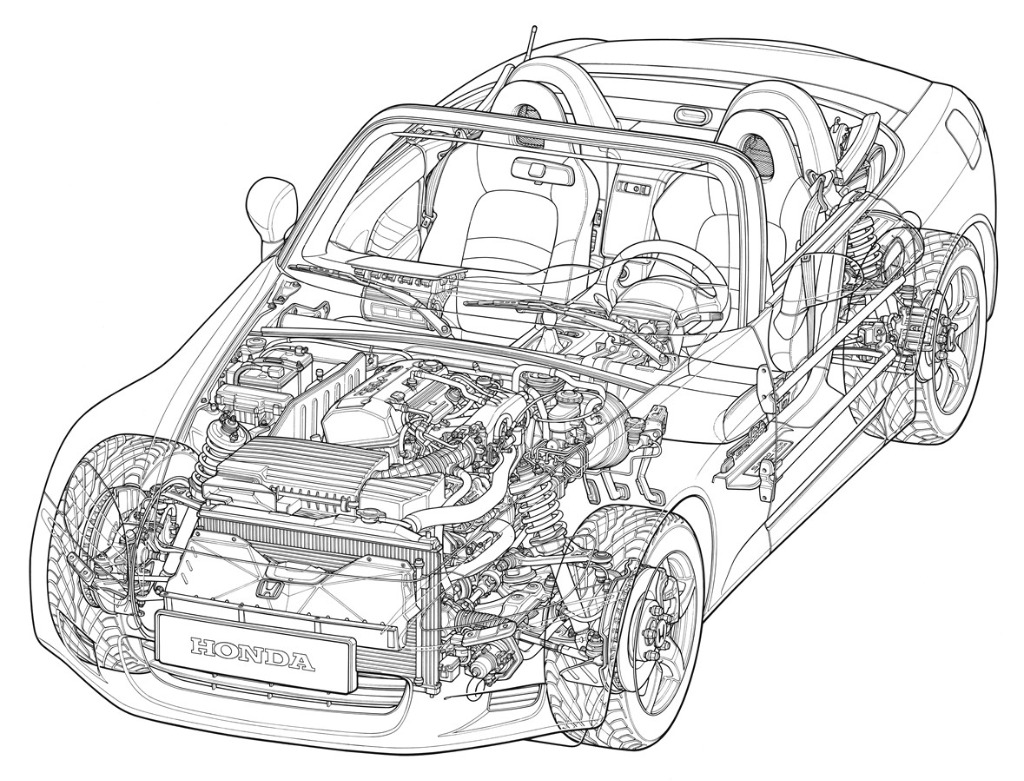
Source: © Honda (Architecture cutaway)
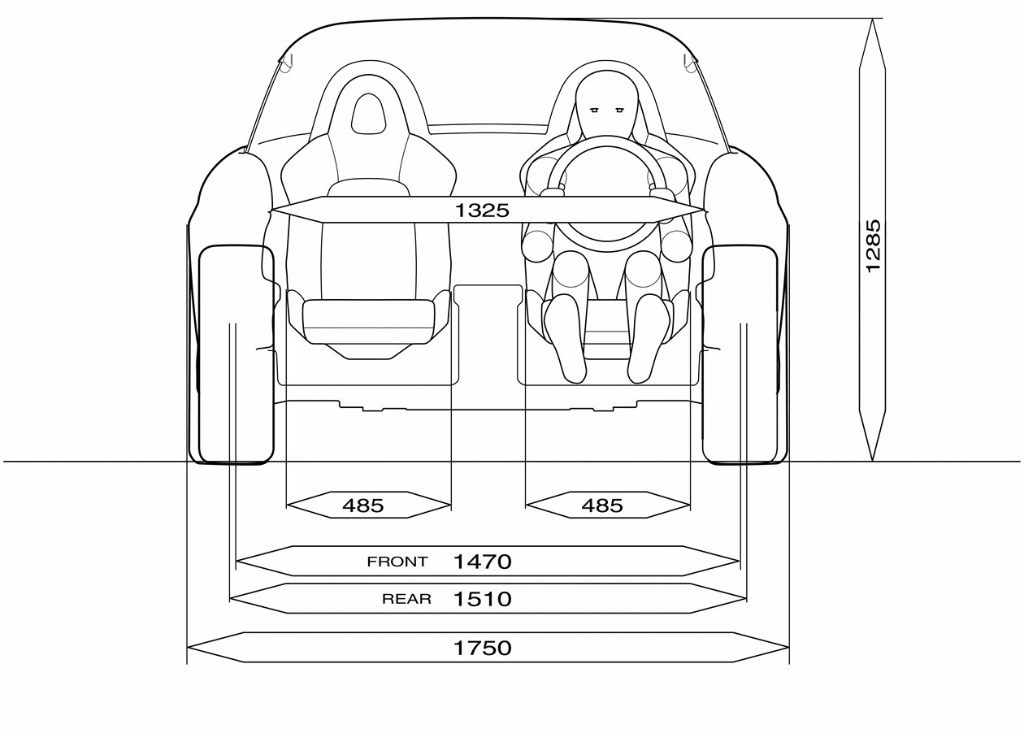
Dimensions and front/rear track widths
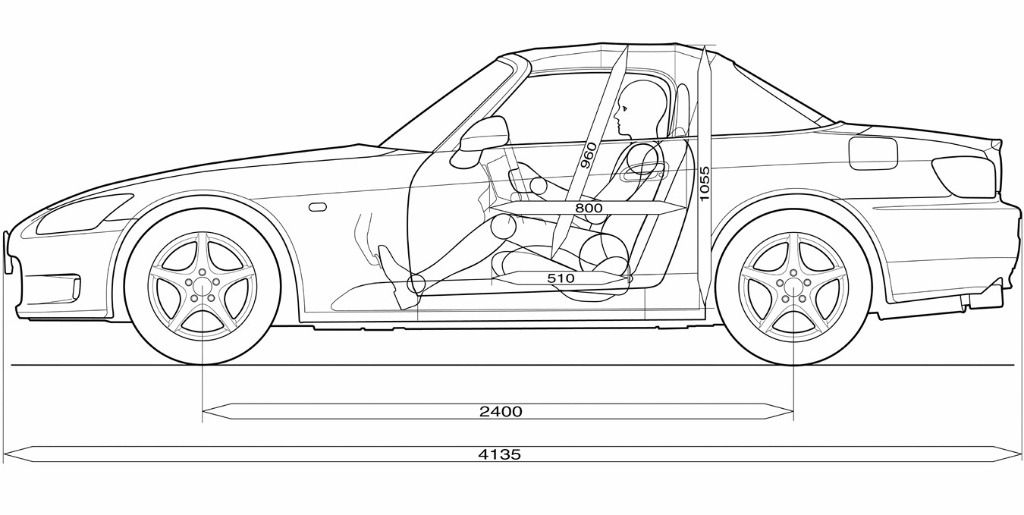
Dimensions, wheelbase, and driving position
Evolutions and Market-Specific Quirks (AP1 vs. AP2)
Over its career (1999-2009), the S2000 underwent several major evolutions, often dictated by feedback from different global markets. It can be divided into two main families, AP1 and AP2, whose specs vary widely depending on which ocean you cross.
- Phase 1 (AP1) - 1999 to 2003: The original version, the rawest. Equipped with the 2.0-liter F20C engine screaming to 9,000 RPM, it has particularly lively chassis settings, with a mobile rear end that forgives no mistakes in optimism (no electronic stability control). It’s the roadster for big-hearted purists.
- Phase 2 (AP2) - from 2004: The car got a cosmetic facelift (bumpers, 17-inch wheels, headlights), a slightly plusher interior, and above all, new suspension and geometry tuning designed to mellow the car’s behavior, making it less treacherous at the limit.
It was during this transition to the AP2 that technical choices splintered according to markets:
- European Conservatism for Sportiness: Assuming the European driver would seek pure sports performance, Honda never imported the 2.2L engine there. Europe thus kept the iconic original 2.0-liter F20C engine and its 9,000 RPM redline until the end of production! Europeans therefore have the immense privilege of enjoying the “safer” and more refined AP2 chassis while keeping the thrill and madness of the original redline.
- Pragmatism in the US (and Japan): Customers on the new continent didn’t appreciate constantly having to downshift due to the lack of low-end torque. Honda responded with the F22C1, increasing its displacement to 2.2 liters. The engine gained a better torque curve but sacrificed the sacrosanct maximum engine speed, dropping to 8,200 RPM. These 2.2L AP2 models also became the norm in Japan in the final years. It’s worth noting, however, that in the US, the extremely rare late-model S2000 CR (Club Racer), which was radicalized and lightened, is currently driving the collector market completely wild.
Design: Chiseled Styling That Transcends Decades
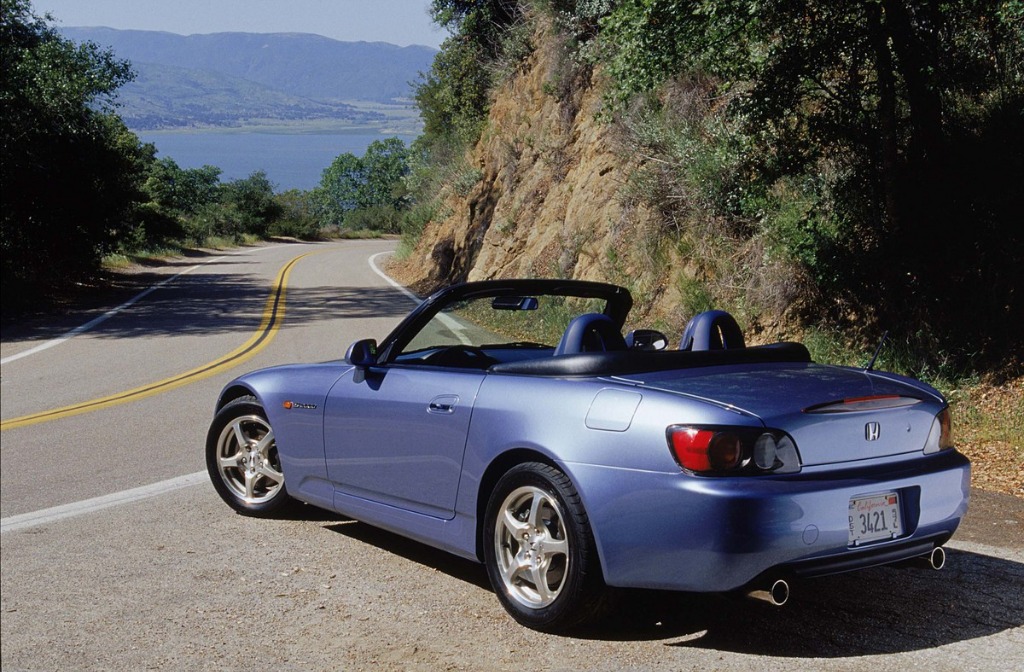
Introduced in 1999 as the main event of the brand’s 50th anniversary, the S2000 boasts a design dictated by function that seems completely immune to aging. Its lines yield to none of the era’s eccentricities: its classic roadster proportions—an endlessly long hood and a cabin pushed back as far as possible over the rear axle—give it a stance that is both beastly and elegant.
Its taut lines, the absence of ostentatious aerodynamic frills, and its sleek headlights make it a car designed purely by function. Far from the clumsy curves of some of its contemporaries, the S2000 looks like a blade ready to slice through the air. Whether the top is up or folded down, the car retains an incredible presence, accented by its dual exhaust tips that betray its sporty character.
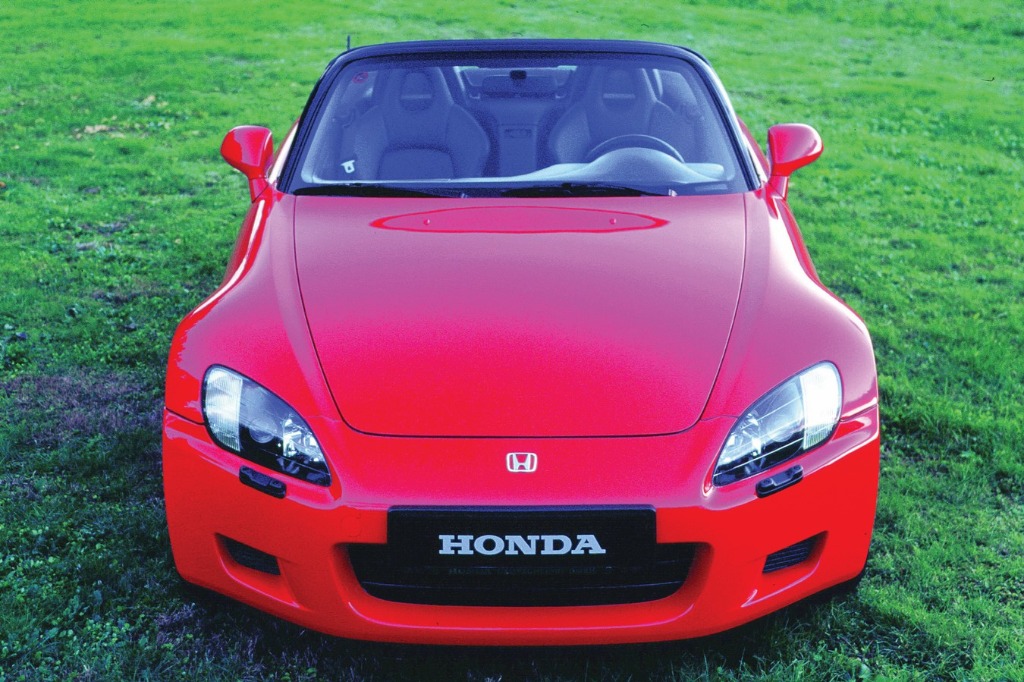
Source: © Honda
Interior: Putting the Driver Center Stage
As soon as you open the door, the message is clear: you are not in a grand touring car, but in a cockpit focused solely on driving. Everything is oriented toward the driver. The digital instrumentation, with its swooping tachometer reminiscent of the golden era of Formula 1, is a masterpiece of legibility and cool factor that has nothing to envy from today’s bland digital screens.
The buttons (climate control, radio, etc.) circle the steering wheel so they can be reached with the fingertips, thus avoiding the need to take your attention off the road. The build quality is typical of 90s-2000s Hondas: no luxurious frills, but solid plastics, tight panel gaps, and remarkable durability. And then, there’s that magic big red button: “ENGINE START”. The emotion begins there.
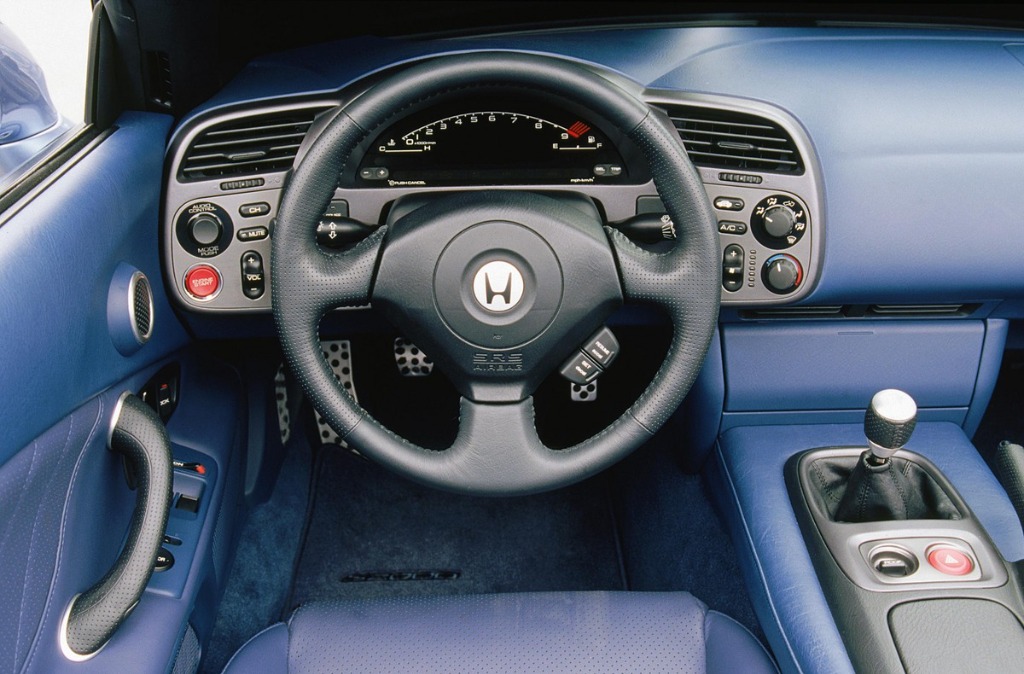
Source: © Honda (Driver-oriented cockpit)
The prominent full bucket seats, often in black, red, or blue leather depending on the exuberant configurations of the time, contribute to this sensation of being one with the machine. They are incredibly difficult to find in perfect condition today (the outer bolsters wear out quickly), increasing the car’s value if they are pristine.
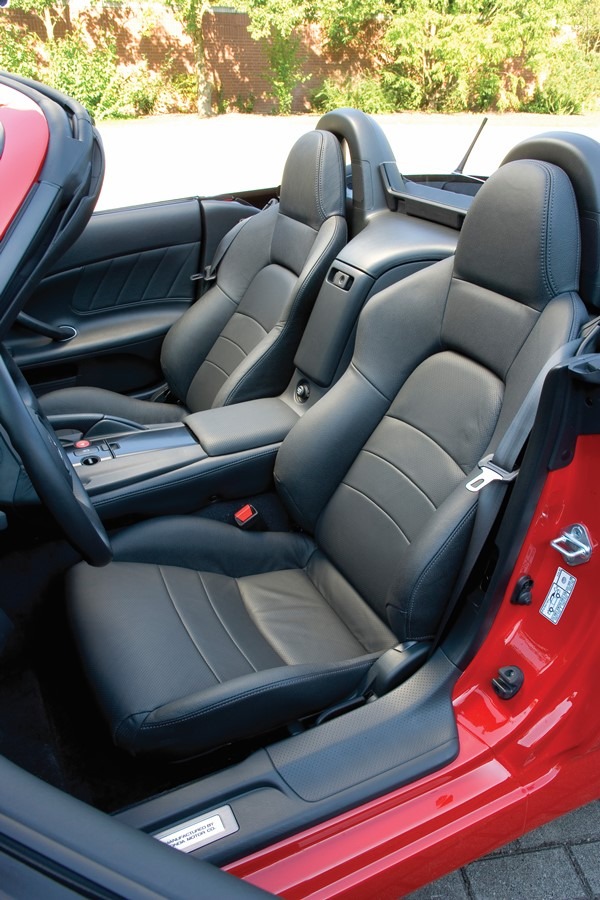
Source: © Honda (Perfectly bolstered seats)
Mechanics: A Motorcycle Engine on Four Wheels
Underneath that long aluminum hood lies the heart and soul of the car: the famous 2.0-liter naturally aspirated inline-4 known as the F20C. It took the much later arrival of the Ferrari 458 Italia to beat its mind-boggling specific output of 120 horsepower per liter!
This engine has two faces thanks to the VTEC system. Below the 6,000 RPM mark, it’s a docile, flexible, and pliable roadster, almost “civilized”. But cross that threshold and the system switches to a more aggressive camshaft profile. The tone changes abruptly, the needle jumps with disconcerting fury, and the sound becomes an addictive metallic scream right up to the dizzying cutoff located at… 9,000 RPM. It’s mechanical, beastly, pure.
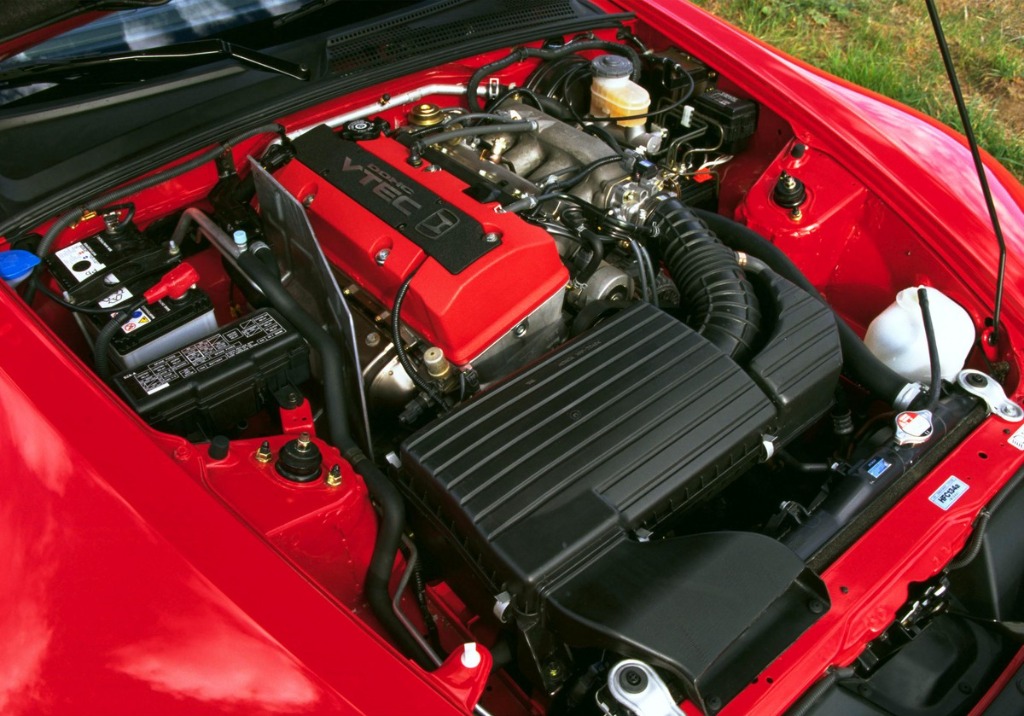
Source: © Honda
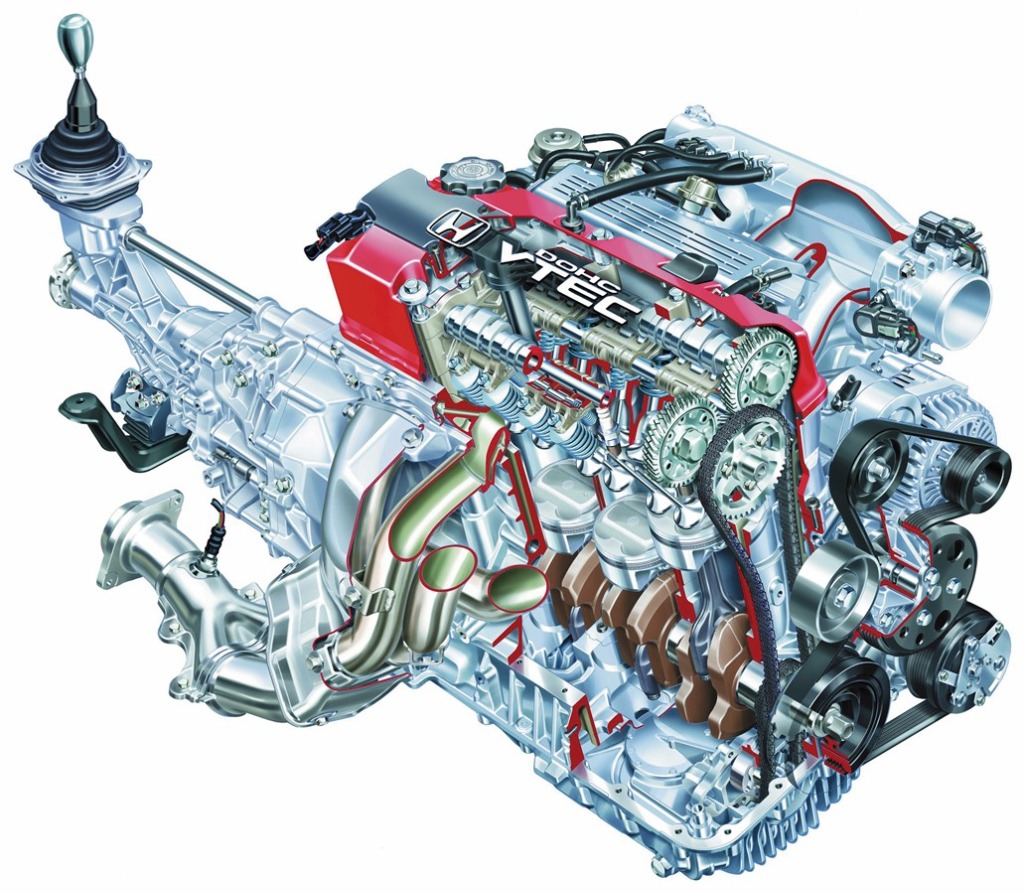
The famous F20C block
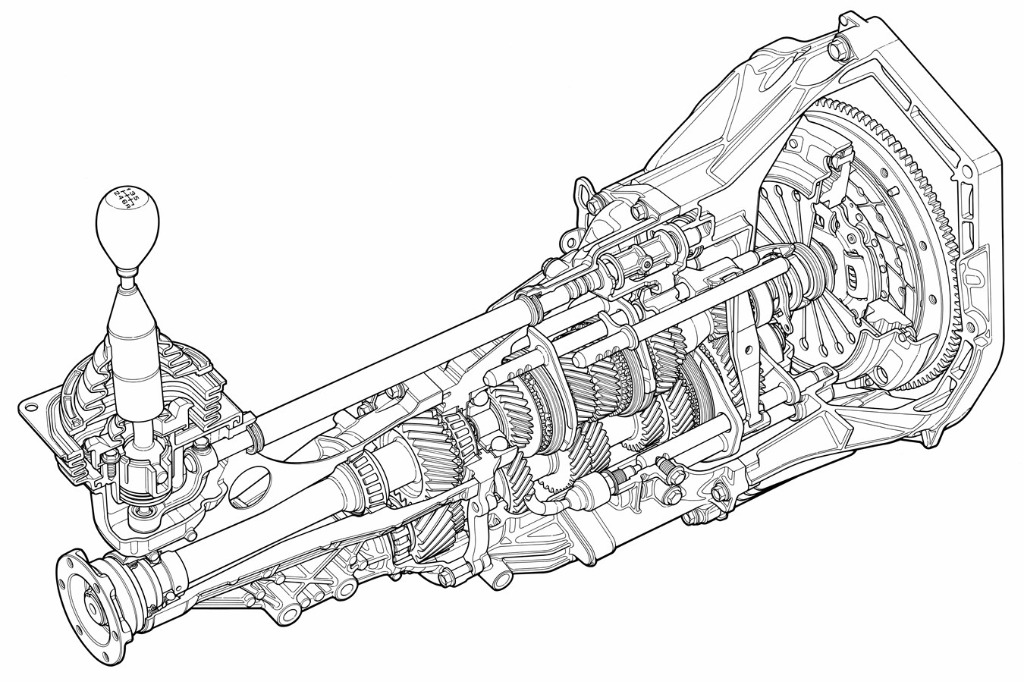
The 6-speed manual gearbox
On the Road: An Unforgiving Scalpel
The chassis design is just as steeped in technical ambition as its legendary engine. The S2000’s architecture is indeed exceedingly rare: it houses a front mid-engine (pushed entirely behind the front axle) without using a complex “transaxle” layout (where the gearbox is relegated to the rear axle). On top of this feat that allows an ideal 50/50 weight distribution, the S2000 is fitted with double-wishbone suspension at all four corners. This single-seater-level sophistication grants it incredible purity of handling.
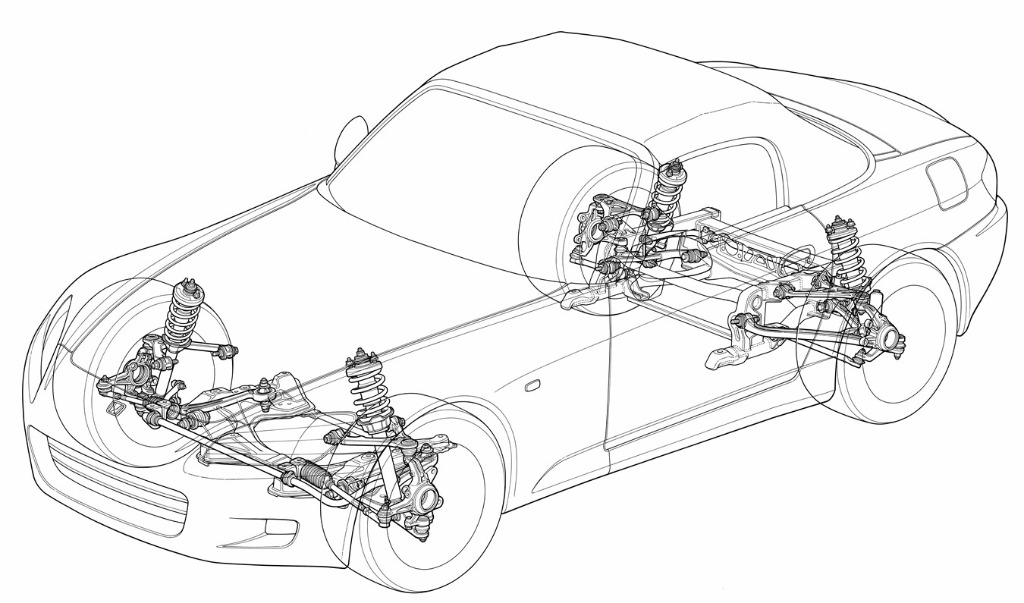
Stacked wishbones at all 4 corners: race car-worthy geometry
Driving an S2000 is a visceral experience. The six-speed manual shifter is universally recognized as one of the best in the world. Its ultra-short throws, its surgical precision (the famous titanium lever), and its metallic engagement are a constant delight.
The extremely rigid X-bone frame gives the car devilish agility. Early series (AP1, 1999-2003) are renowned for their highly mobile rear end. In the wet or with a slightly too optimistic throttle input mid-corner, the lack of electronic aids (we had to wait for the final phase to see stability control appear) and the peaky nature of the engine can catch you off guard very violently. It’s a car that demands humility and talent to be pushed to the limit, parodoxically making it the absolute purist’s car. The following series (AP2) received revised suspension geometry to soften the tail’s unpredictable nature.
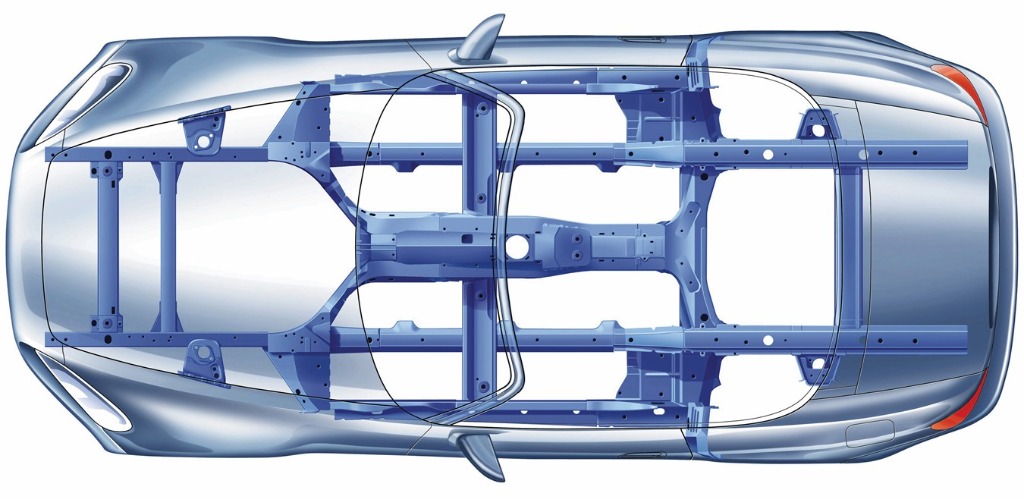
“High X-Bone” frame optimizing rigidity
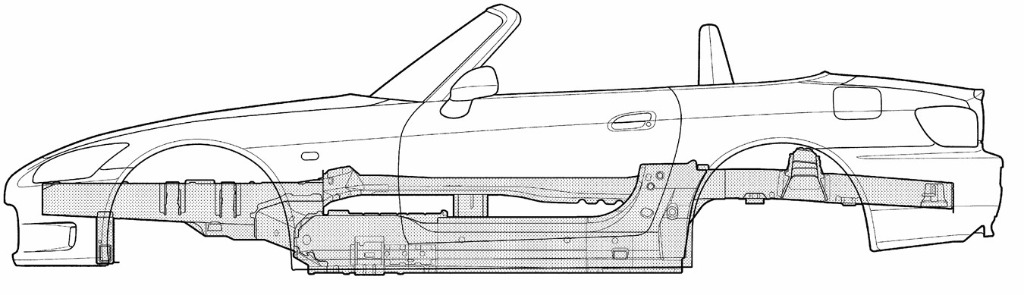
Extremely low center of gravity
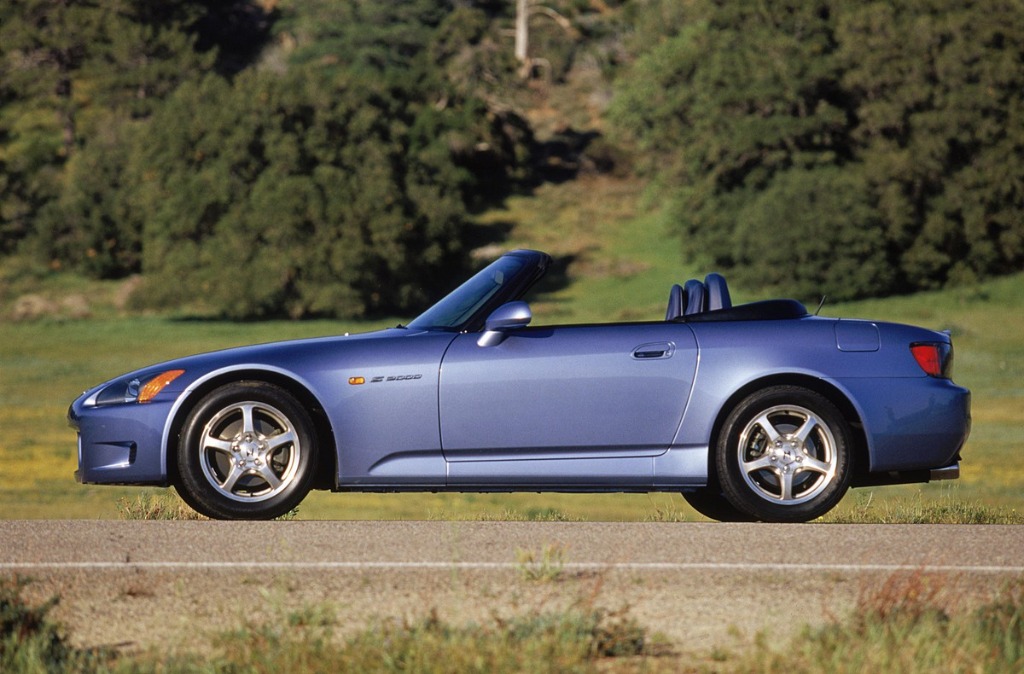
Source: © Honda
Daily Cruising or Road Tripping: Pure Character
If you’re looking for the archetype of a “cushy grand tourer”, keep walking. The S2000 is loud even with the top up, the suspension is stiff, and storage space is practically anecdotal. Yet, the car’s flawless reliability makes it perfectly usable every day if you’re willing to accept its raw temperament.
In road trip mode, with the top down in the mountains, the experience is absolutely intoxicating. The symphony of the engine kissing 9,000 revs coupled with the open air and the feedback from a hyper-direct steering rack makes you forget all its comfort flaws. It’s an ethos of “drive hard, smile hard.”
The legendary reliability of the VTEC S2000 engine
Contrary to what hypercar-level specific output and race-motorcycle RPMs might suggest, the S2000 is a rock. Mechanically speaking, as long as you follow maintenance religiously (engine oil changes with the recommended viscosity every year or 10,000 km maximum, and monitoring oil consumption inherent to VTEC), it can rack up hundreds of thousands of miles.
The only dark spots to check for: the condition of the timing chain/tensioner (tensioner wear), suspension bushings that harden with age affecting handling, as well as the canvas soft top which can tear at the fold points. The Torsen rear differential also requires very regular fluid changes.
Investment Perspective: The Legend in the Making
The S2000 is already a statutory collector’s item, but its potential and value heavily depend on the market you operate in, as the production of over 110,000 units was not distributed equally:
- US Market (over 65,000 units sold): The United States absorbed the vast majority of production. The market is extremely active and mature there (notably via Bring a Trailer auctions). AP2 versions hold very high values there, especially the ultra-rare S2000 CR (Club Racer), whose roughly 700 produced units now easily trade for sums over $100,000. This aggressive American speculation inevitably pulls the global value of S2000s up worldwide.
- UK Market (approx. 8,000 units): With its strong roadster culture, the British market was Europe’s best customer. RHD (Right-Hand Drive) models are abundant, and prices in the UK have consistently been historically low, allowing many continental enthusiasts to import these models cheaply. However, undercarriage condition must be carefully scrutinized due to climate-related corrosion. It’s worth noting the existence of the ultimate swan song edition S2000 GT Edition 100 in this market.
- Continental EU Market (LHD): European S2000s with Left-Hand Drive (LHD) remained niche in sales volume (only a few thousand across the continent). Beautiful, well-preserved, and low-mileage European examples are therefore genuine rarities. With Europe also offering the exclusive privilege of the 2.0L F20C (9,000 RPM) engine on all AP2s, “original European” cars are some of the most sought-after and lucrative Youngtimer investments today.
- Japan (JDM): The Japanese Domestic Market is specific (RHD) and brimming with exclusive trims. In addition to the famous optional VGS variable ratio steering (on the Type V), Japan benefited from the Type S version at the end of its run (slightly less radical than the American CR but sharing its fierce aero kit). With the massive importation window for 25-plus-year-old vehicles to the US market opening up, valuations for these JDM gems are currently skyrocketing in Japan.
Investment Summary:
- Rarity/Exclusivity: While total production numbers are relatively high (especially in the US), finding a completely unmolested, low-mileage original example with a clean history is turning into a real challenge, as many cars endured questionable tuning or track abuse.
- Appreciation: Values have doubled in ten years for pristine examples. The trend remains very bullish.
- Liquidity: Exceptionally high. The passion surrounding this model guarantees perpetual demand.
It is a future-proof investment, as emotional as it is financial!
Buying Advice: What Should You Look For?
Ideally, seek out a completely stock model, or at least one without deep engine modifications or heavy body kits. It’s much better to buy a well-serviced car with clear history and 75,000 miles than a pseudo-gem displaying 30,000 miles with a murky background and questionable geometry.
If you are an experienced driver seeking the original brutality, aim for a Phase 1 (AP1), which is more nervous and wild, but beware of the rear end at the limit. If you want more accessibility at a brisk pace without excessive cold sweats, the facelifted models with reworked suspension will balance the scales. And keep an eye out for corrosion on the shock towers and undercarriage, a chronic illness for Japanese cars of this generation.
Source: © Honda
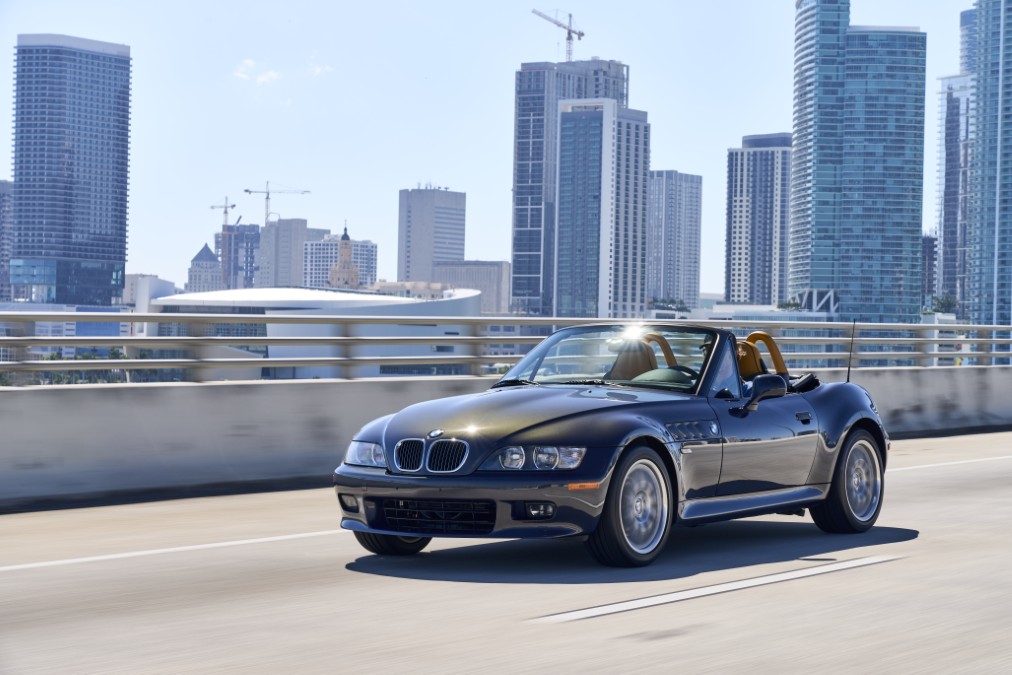
👉 Also check out: Hesitating with a European roadster? Discover why the BMW Z3 3.0i also combines naturally aspirated thrills and excellent appreciation potential.
Car Evaluation
Evaluation Criteria
Appreciation Potential
Potential for value increase over time
"The era of naturally aspirated engines capable of hitting 9,000 RPM is definitively over. The demand for pure, unadulterated roadsters is exploding, and the S2000 is in pole position."
Ownership Cost
Total cost of ownership including maintenance, insurance, and running costs
"It's a Honda. The reliability of the F20C block is legendary if maintenance (regular oil changes, respecting warm-up times) is strictly followed. Wear and tear parts remain affordable for the performance offered."
Driving Pleasure
Pure driving enjoyment and emotional connection
"A transmission considered by many as the best ever built, combined with a fabulous dual-personality engine. A pure sensation machine, demanding and rewarding."
Market Liquidity
Ease of selling when needed
"An original S2000, or one with reversible and documented modifications in a sought-after color, generally sells in a few days. The market is extremely reactive."
Exclusivity & Rarity
How rare and exclusive the vehicle is
"With over 65,000 units sold new in the US market between 1999 and 2009, standard S2000s are not inherently rare. However, finding a perfectly maintained, unmodified, original condition example is becoming increasingly difficult and highly sought after."
Similar Cars
Related Articles