Porsche 911 (997) Carrera GTS manual: The Forgotten Gem

Specifications
Basic Information
Performance & Value
For many purists and market observers, the quest for the “perfect 911” often turns into an endless debate. On one hand, the GT3 iterations seduce with their hardcore track focus; on the other, classic Carreras offer unbeatable daily versatility. But in late 2010, Porsche delivered a masterstroke by unveiling what would become the swan song of the 997 generation: the Carrera GTS.
And while a PDK-equipped GTS is already a dream machine, this mydriveROI article zeroes in exclusively on the ultra-niche manual transmission spec. Hidden in this specific branch of the Porsche family tree lies a staggering mechanical rarity, worthy of the brand’s most revered limited editions (Speedster, 911 R…).
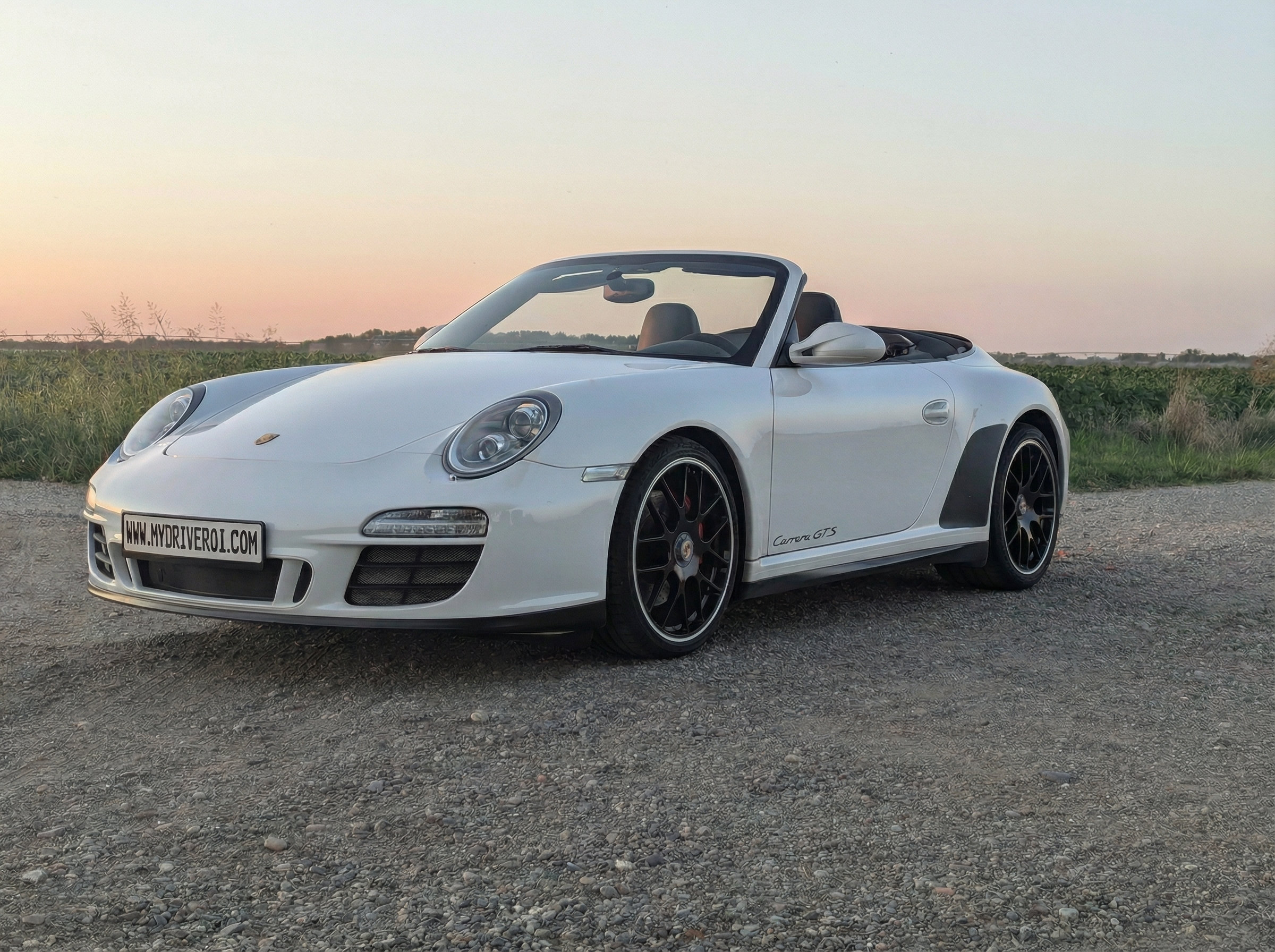
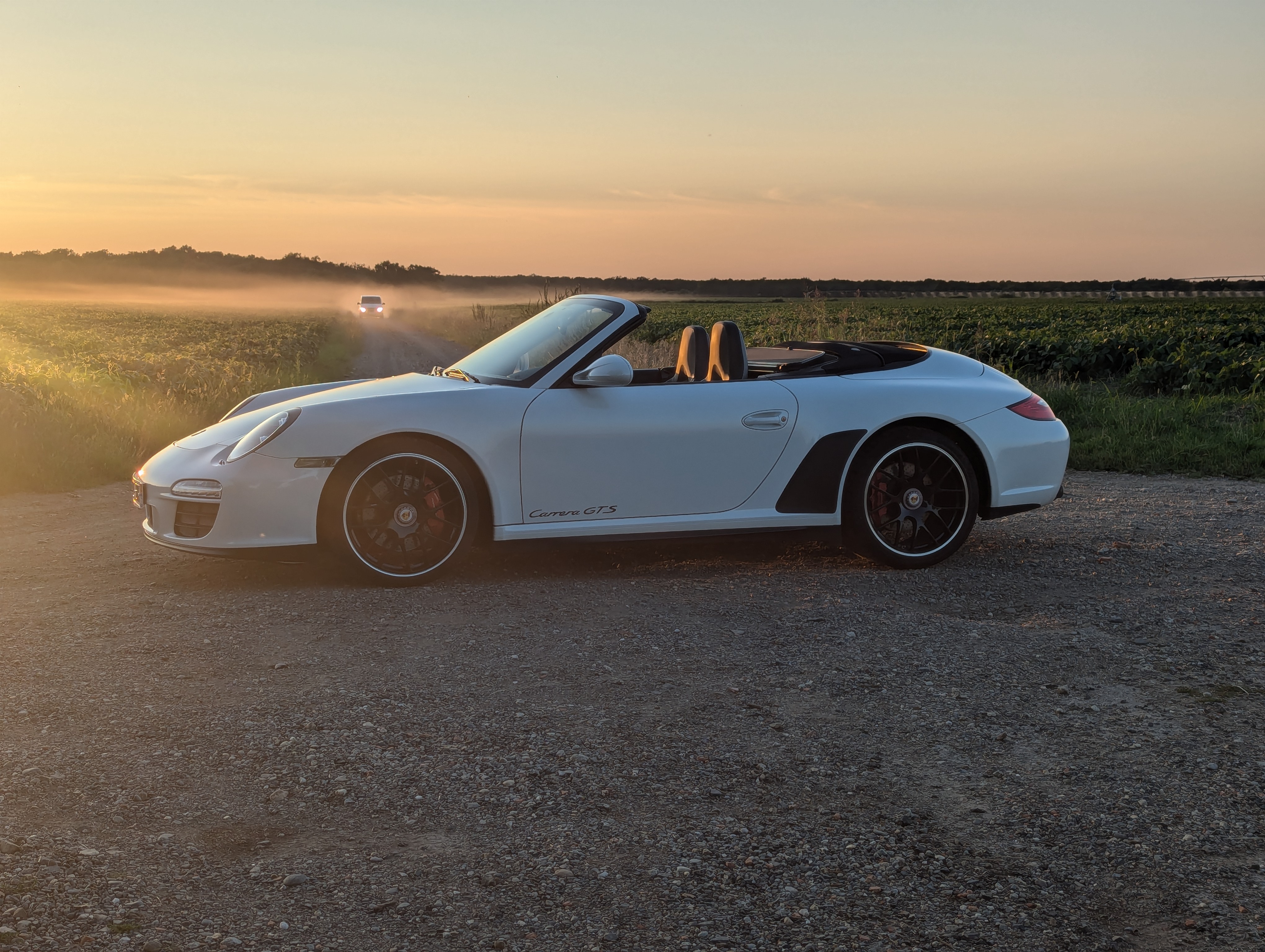
The aggressive Widebody look paired with specific “black” accents (lip, grilles, headlights). Source: © MyDriveROI
The True Sweet Spot: Widebody and RWD
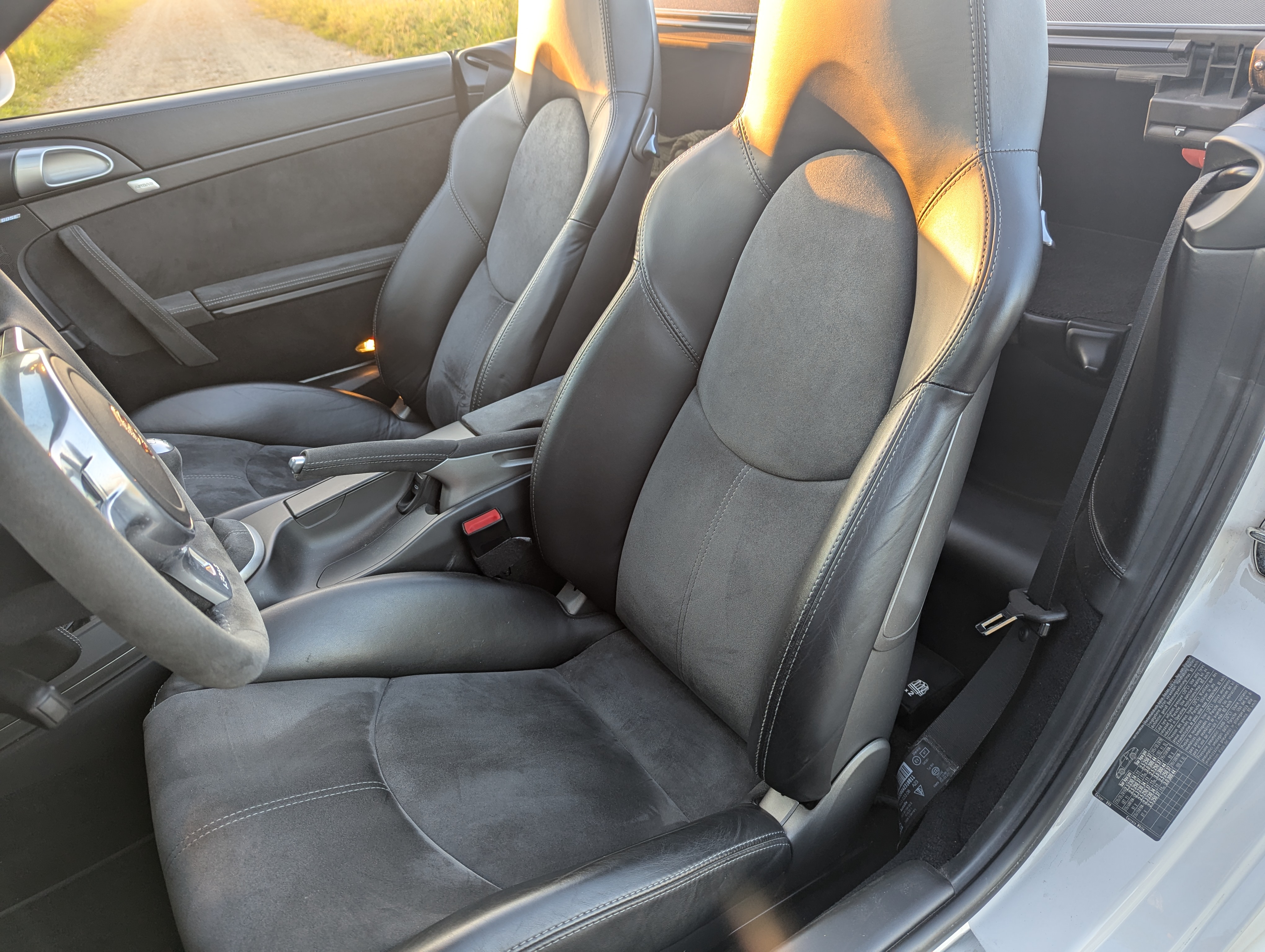
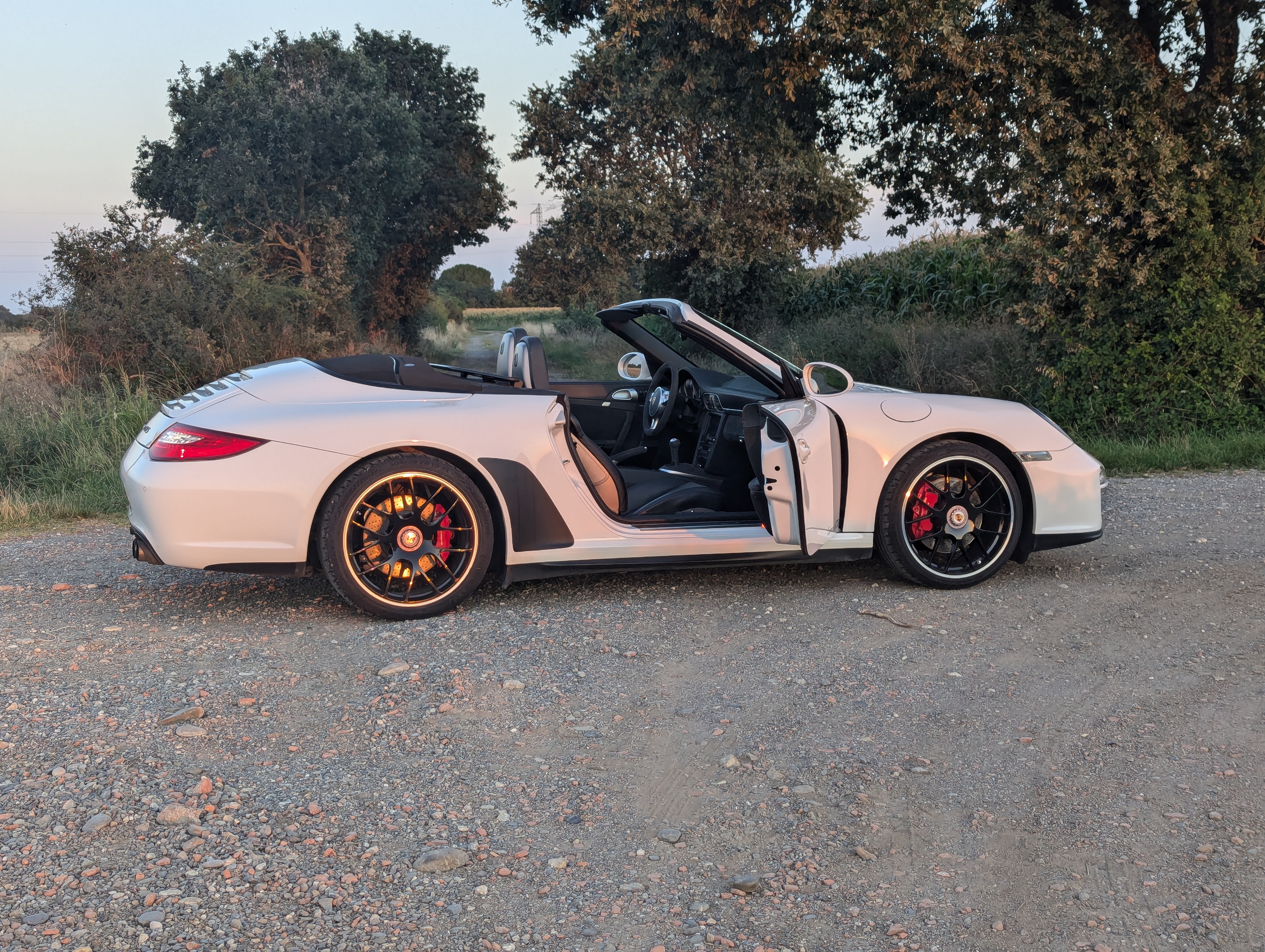
Porsche’s genius with the GTS was to offer—alongside bespoke logos and a very “motorsport” blacked-out aesthetic—a wider shell (“Widebody”) usually reserved for Carrera 4 or Turbo models. Although the GTS was available in both Carrera 4 GTS and Carrera 2 GTS versions, the latter (the C2) truly stands out. Why? Because it is the only “widebody and rear-wheel drive” offering in the entire “classic” Carrera lineup of that era. The stunning 19-inch center-lock RS Spyder wheels create a beastly stance that oozes racing heritage.
The famous “RS Spyder” center-lock wheels. Source: © MyDriveROI
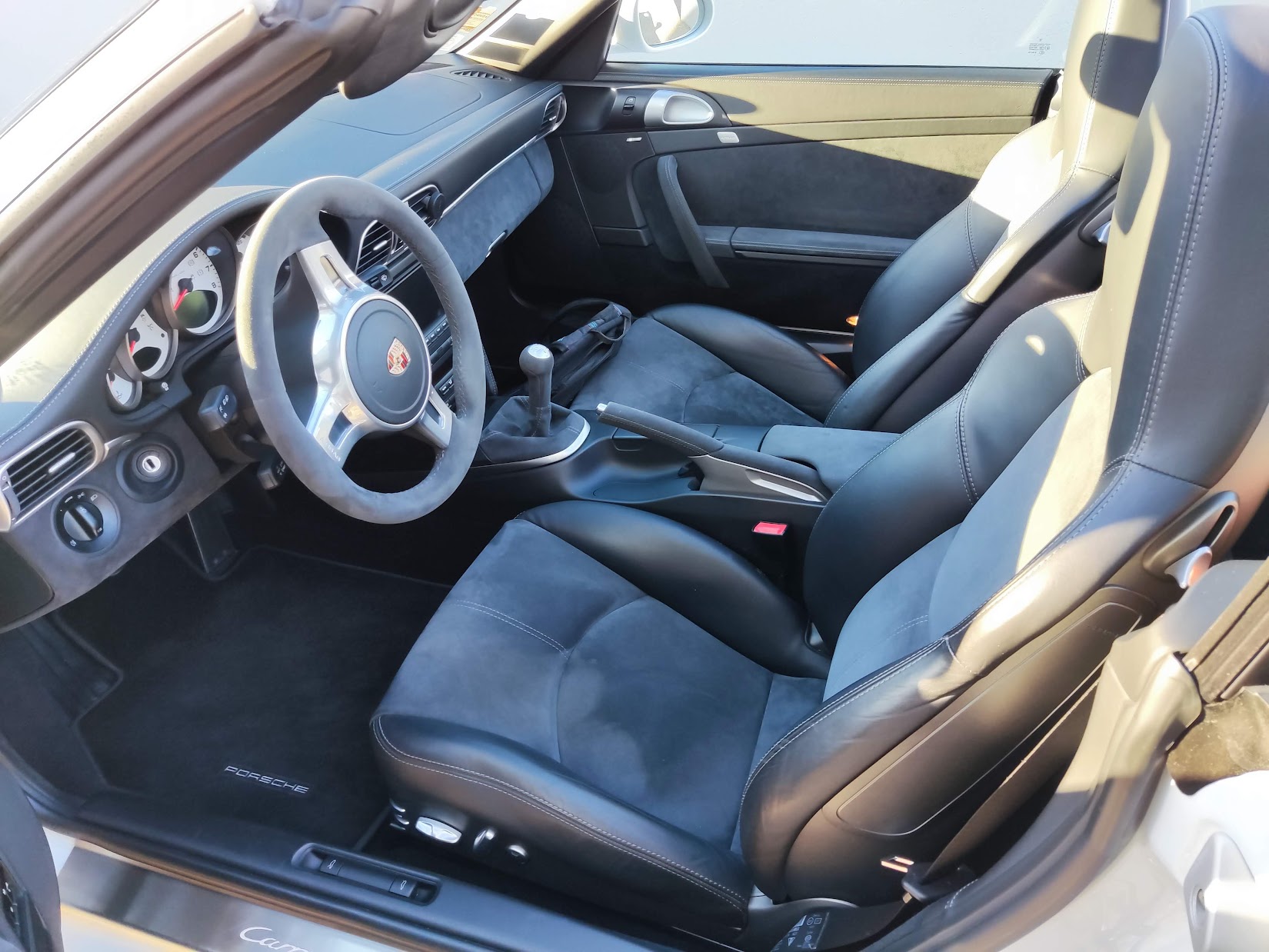
The interior appointments further cement this special status by echoing that “GT3 spirit”. The cabin is generously swathed in Alcantara (steering wheel, gear shifter, handbrake, headliner, and seats), which is not only warm and fiercely effective at holding you in place: this profusion of luxurious, race-inspired materials gives the GTS even more exclusivity over a standard Carrera, further justifying its collector status.
X51: The Naturally Aspirated Pinnacle
Let’s pop the hood. The 997.2 generation introduced the 911 world to the new Direct Fuel Injection (DFI) 9A1 engine. Beyond direct injection, the major mechanical leap of this block is the return to dry-sump lubrication (integrated, via multiple scavenge pumps), ensuring perfect oil pressure even during heavy lateral g-forces on track. This radical architecture, coupled with the elimination of the intermediate shaft, definitively kills the Achilles’ heel of the controversial IMS bearing and lays to rest the “bore scoring” fears associated with the older M96/M97 blocks.
The GTS is equipped straight from the factory with the famous and expensive X51 Powerkit. This bumps the naturally aspirated 3.8L to 408 horsepower through extensive modifications to the intake (with its resonance manifold) and the Sport exhaust (PSE as standard). This setup delivers a notably throaty exhaust note, quite distinct from other Carreras, and is transcended by the highly unique induction roar of this optimized intake. For those wishing for even more vocal intensity without ruining the engine’s tonal character, deleting the center muffler via a “bypass” pipe (from Sharkwerks or Milltek, for example) is the best move: it transforms the sound without creating any drone when the PSE exhaust valves are closed.
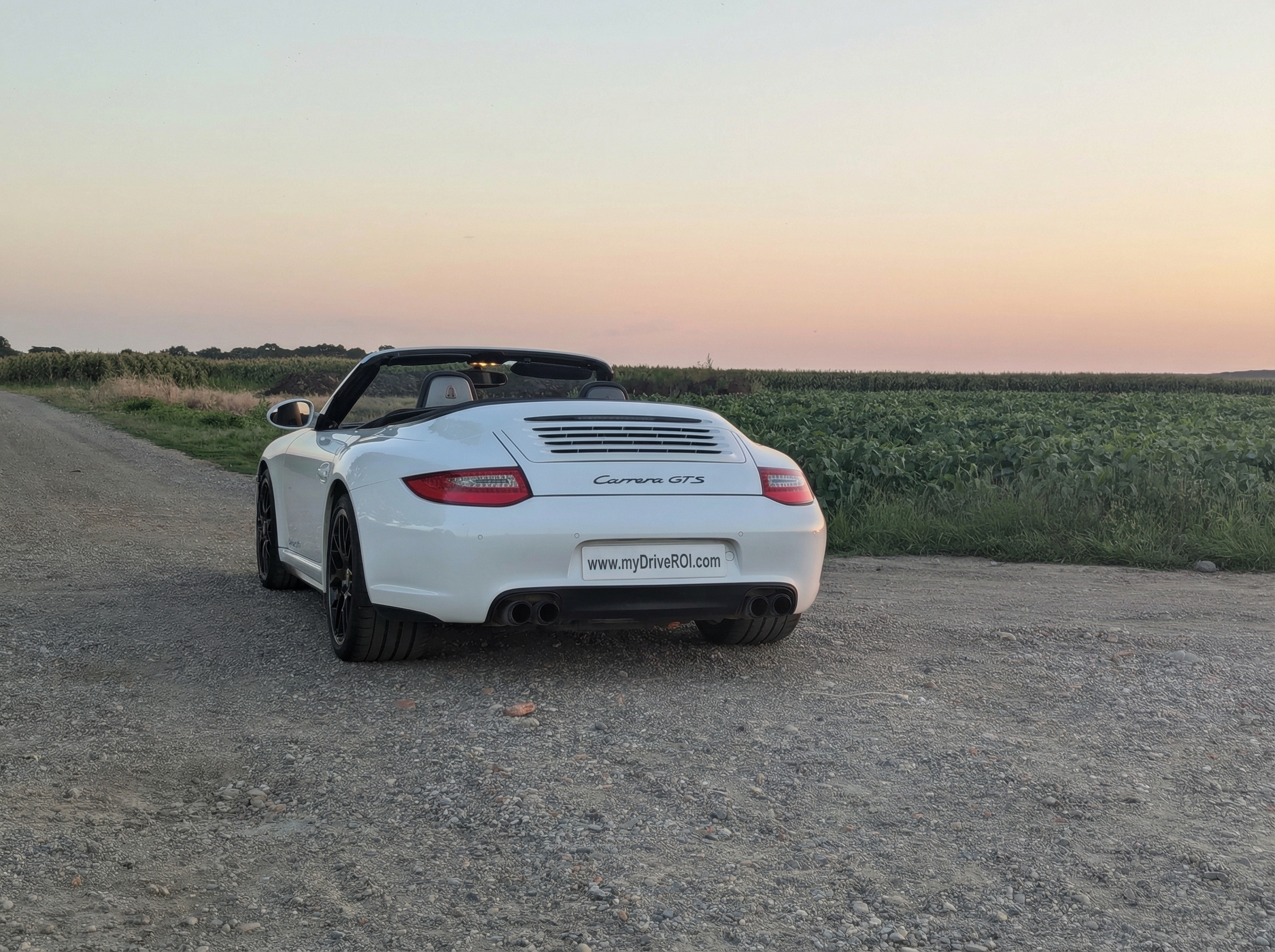
The X51 kit delivering 408 hp. Reliable, naturally aspirated, and melodic. Source: © MyDriveROI
On the Road: An Authentic RWD 911
Thanks to the X51 kit, the engine benefits from a slight torque bump across the entire rev range. While the pure stopwatch performance might not drastically evolve compared to a 385 hp Carrera S, the sensations behind the wheel offer a radically different flavor: with the manual gearbox, you never feel a lack of pull. But the real showstopper hits with a genuinely explosive surge of power between 6,000 and 7,500 rpm, magnified by a particularly pronounced intake howl that reveals a much throatier and mechanical note than the Carrera S and 4S. It is the absolute pinnacle of “Analog” sensations. This is, in fact, the ABSOLUTE LAST generation of a standard-production 911 to feature hydraulic power steering and a 6-speed manual gearbox (the 991 abruptly shifted to electric steering that heavily “filters” the road, and an often-debated 7-speed manual). In this 997 GTS, the manual shifter is divinely gated, and its gear ratios perfectly match the engine’s torque curve. The road feedback shoots straight into your hands, and heel-and-toe downshifts feel natural, joyous, and perfect.
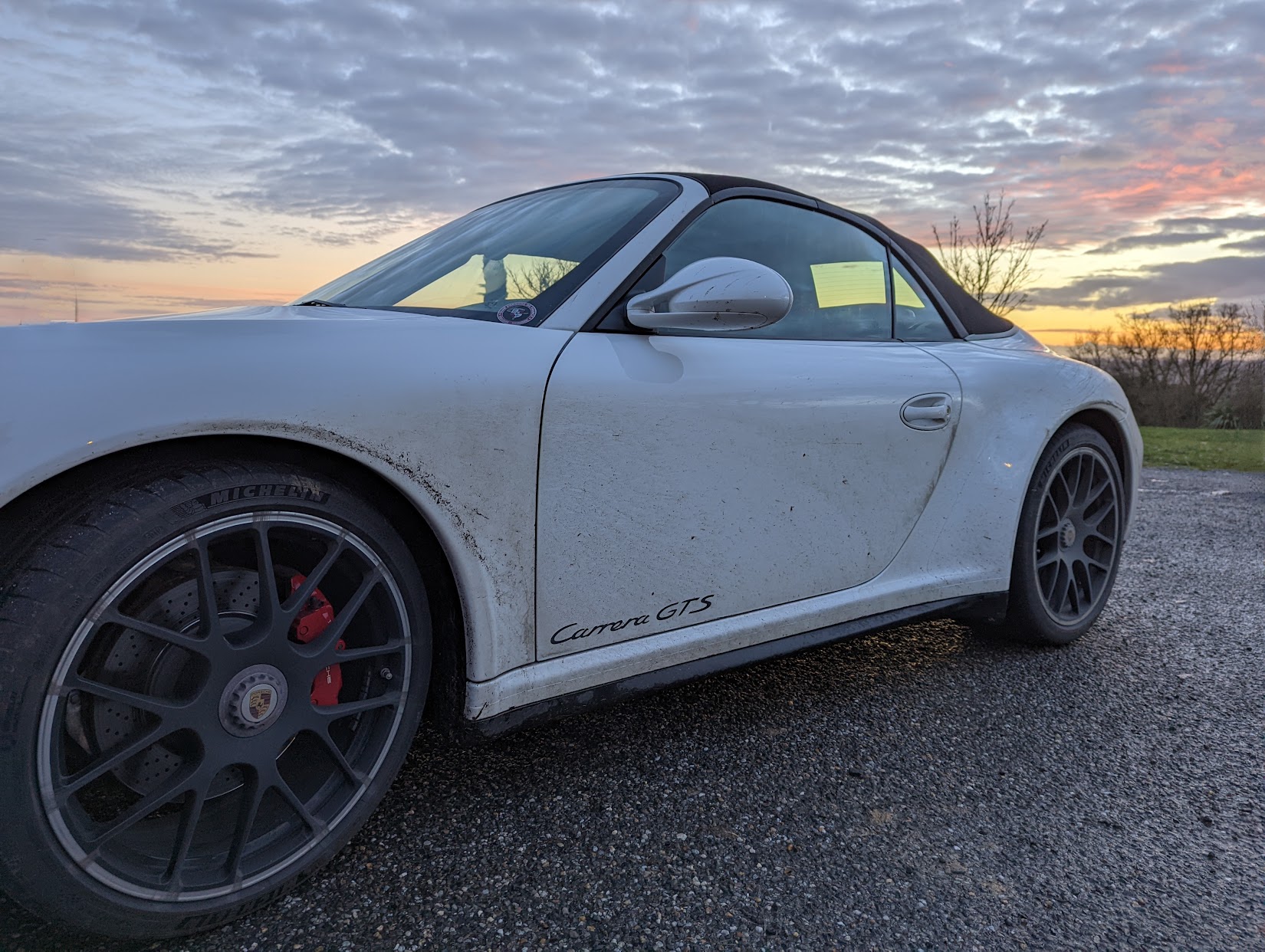
The gorgeous RS Spyder centerlock wheels. Source: © MyDriveROI
Dynamically, the exclusive “RWD and widebody” chassis gives it a very “old-school 911” character. The widened rear track provides demonic amounts of grip, while the front end readily subjects itself to the pendulum movements typical of the 911’s rear-engine architecture. It drives almost like a classic 911: you absolutely must “plant the front end” by trailing a bit of brake upon corner entry. This demanding driving technique can be surprising during a brief test drive, but once you figure it out, its effectiveness is staggering—even in the rain, where the traction is unbelievable. Although this car delivers highly tactile, old-fashioned sensations, the overall efficiency of the chassis/engine duo is top-tier. Its agility is also startling thanks to the short wheelbase of this generation, which still feels very “small,” making this Carrera GTS incredibly easy to place with pinpoint accuracy on tight, winding backroads.
Reliability: Solid, But Needs TLC
From the moment you buy, this investment requires you to thoroughly check what’s going on under the skin. The big X51 DFI block is extremely tough. However, it demands a meticulous review because the slightest technical issue gets expensive fast:
- Over-revs: The DME over-rev ranges (ranges 1 to 6) of this famous engine must be decoded: The key is to have zero over-revs above range 2. If there are recent hits in ranges 3, 4, 5, or 6, walk away. On the other hand, if they are very old and few in numbers, there’s no major cause for concern, as they are likely false positives.
- Center-lock nuts: These require precise aluminum paste lubrication (OptiMoly), an enormous torque wrench, and strict adherence to the 600 Nm torque spec.
- HPFP (High-Pressure Fuel Pump): Due to direct injection, the high-pressure pump can show signs of weakness. Making sure it functions properly or has been replaced is a historical plus.
Source: © MyDriveROI
The Numbers Don’t Lie: Astonishing Rarity
Up until now, we’ve “just” been describing the finest Carrera of all time. But let’s dive into the true investment arguments—the metrics that send the market into a frenzy.
Total global production of the 997 GTS sits at 6,747 units. In our pure asset-appreciation logic, we can immediately rule out the “Carrera 4 GTS” versions: while excellent, they remain philosophically and dynamically too close to the traditional Carrera 4S. The Carrera 2 GTS (RWD) is the one that boasts an absolutely singular chassis.
Let’s zoom in on the 2,656 units of the Carrera GTS Coupe (C2). Because the Doppelkupplung (PDK) gearbox saw a massive boom in popularity during these years (estimated at 80% of orders for its comfort and modernity), the overall manual take-rate would only hover between 15% and 25%!
Let’s do the math: on 2,656 units, applying a conservative 20% take-rate leads us to approximately 500 to 530 manual examples produced WORLDWIDE.
Practically speaking, the current market is actively hunting a naturally aspirated Carrera that is theoretically rarer than a 997 GT3 RS 4.0 or a 911 R, despite those badges being incomparably more hyped. The price comparison becomes mind-blowing:
| Model | Production Volume (Global) | Estimated Current Value |
|---|---|---|
| 997 GT3 RS 4.0 | 600 units | ~ €450,000 |
| 991 R | 991 units | ~ €350,000 |
| 997 Carrera GTS Coupe (C2) Manual | ~ 530 units | ~ €115,000 |
The market anomaly is glaring for an investor chasing accessible hyper-exclusivity.
The Hidden Gem: The Manual GTS (C2) Cabriolet
Our search for an undervalued collector’s piece doesn’t stop there. Let’s go a step further: the manual Carrera GTS (C2) Cabriolet. With a base production of 1,813 RWD Cabriolets, the same calculation (around a 20% manual take-rate) gives us a staggering result: roughly 360 manual units globally.
In the exclusive realm of purist open-top Porsches, one might be tempted to compare it to the Boxster 981 Spyder. Except the Spyder saddles you with the constraints of an agonizing, limiting, and tiring manual roof during long road trips. In contrast, this manual C2 GTS Cabriolet delivers all the fury of the X51 kit (408 hp), without sacrificing the convenience of a proper power soft-top along with the best aerodynamic protection of any 911 Cabriolet in open mode (thanks to the wind deflector).
Ultimately, this exceedingly rare iteration fulfills the fantasy of those who always dreamed of a 997 GT3 Cabriolet for intense road use—a concept that Porsche’s catalog simply never dared to offer. It wasn’t until the highly exclusive Speedster models that Porsche rectified this absence and offered a true, hardcore, naturally aspirated open-top GT. But even here, running the numbers reveals an incredible investment gem:
| Model | Production Volume (Global) | Estimated Current Value |
|---|---|---|
| 997 Carrera GTS Cabriolet (C2) Manual | ~ 360 units | ~ €115,000 |
| 997 Speedster | 356 units | ~ €300,000 |
| 991 Speedster | 1,948 units | ~ €350,000 |
A genuine market anomaly, the manual GTS Cabriolet offers statistical rarity identical to the highly celebrated 997 Speedster equipped with the exact same 408 hp X51 engine (which, alas for purists, only came in PDK), yet trades for roughly a third of the price!
Source: © MyDriveROI
MydriveROI Verdict: Two Undervalued Gems
In the end, through this analysis of the 997 market, we have surfaced two indisputably undervalued sports car gems compared to their RS or Speedster badged rivals.
The first is the manual GTS Coupe (C2), a fantastic “GT3 Touring” before its time. However, a fraction of potential Coupe buyers might still be swept up by doubt and ultimately tempted by the hardcore edge of a genuine 997 GT3.
On the other hand, for our second gem, the manual GTS Cabriolet (C2), the conclusion is final: there is STRICTLY no alternative that is as exclusive. The road-going compromise it strikes between old-school tactility, performance (X51 Kit), and open-air comfort is wholly exceptional.
It is, therefore, our ultimate recommendation for a true “pleasure investment.” Just be warned: it would be a shame (and borderline indecent) to just leave it parked under a cover in a climate-controlled garage waiting for its value to climb. No—this ultra-rare naturally aspirated Cabriolet is meant to be driven! You must truly maximize the mechanical thrill it is ready to deliver with every press of the throttle.
Source: © MyDriveROI
Car Evaluation
Evaluation Criteria
Appreciation Potential
Potential for value increase over time
"Forget its apparent 'production model' status. With around 530 units in the manual C2 Coupe configuration, it's one of the rarest gems of the modern Porsche era. Its ~360 Cabriolet counterparts are even rarer, operating in a segment free from any GT3 competition."
Ownership Cost
Total cost of ownership including maintenance, insurance, and running costs
"The 9A1 DFI engine coupled with the X51 power kit proves to be reliable, erasing the flaws of the phase 1. However, be mindful of the mandatory tools required for the center-lock wheels."
Driving Pleasure
Pure driving enjoyment and emotional connection
"The final naturally aspirated engine before the turbo era (excluding the GT lineup) and the ultimate hydraulic power steering, all wrapped in a widebody shell. An absolutely magical balance between GT and Track."
Market Liquidity
Ease of selling when needed
"The Manual Premium commands a +30% to +40% hike over the PDK, and American demand is violently drying up the market for the finest examples."
Exclusivity & Rarity
How rare and exclusive the vehicle is
"In the manual Carrera (C2) Coupe configuration WITHOUT a sunroof, it is paradoxically rarer than a 997 GT3 RS 4.0! The same goes for the Cabriolet counterpart, which is much rarer than a 997 Speedster."
Similar Cars
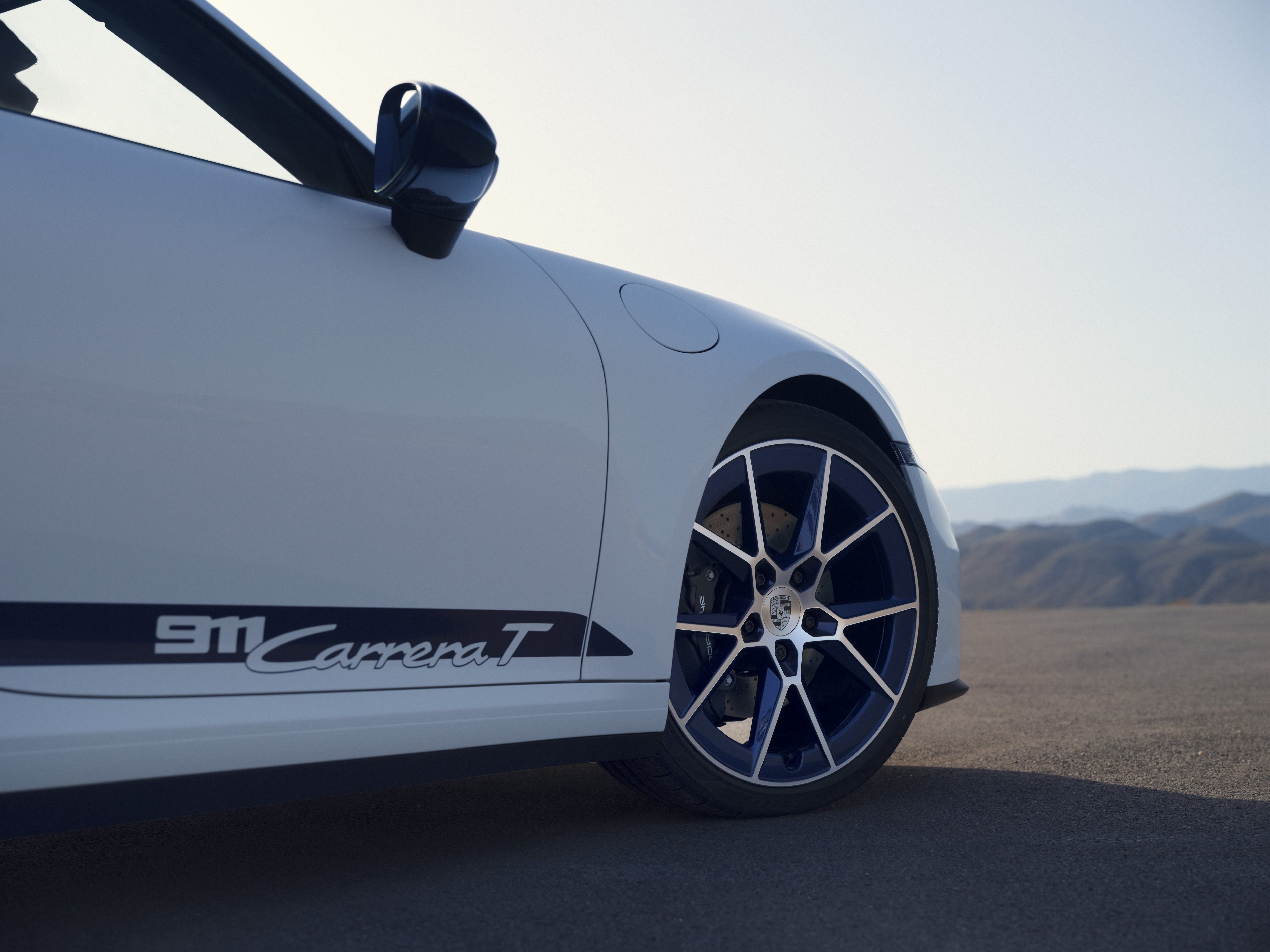
Porsche 911 (992.2) Carrera T: A Brand-New Gem in the Lineup
Porsche 911 (992.2) Carrera T
Porsche Boxster S 987.2 - The Ideal Boxster for Entering the Porsche Universe.
Porsche Boxster S 987.2
Related Articles