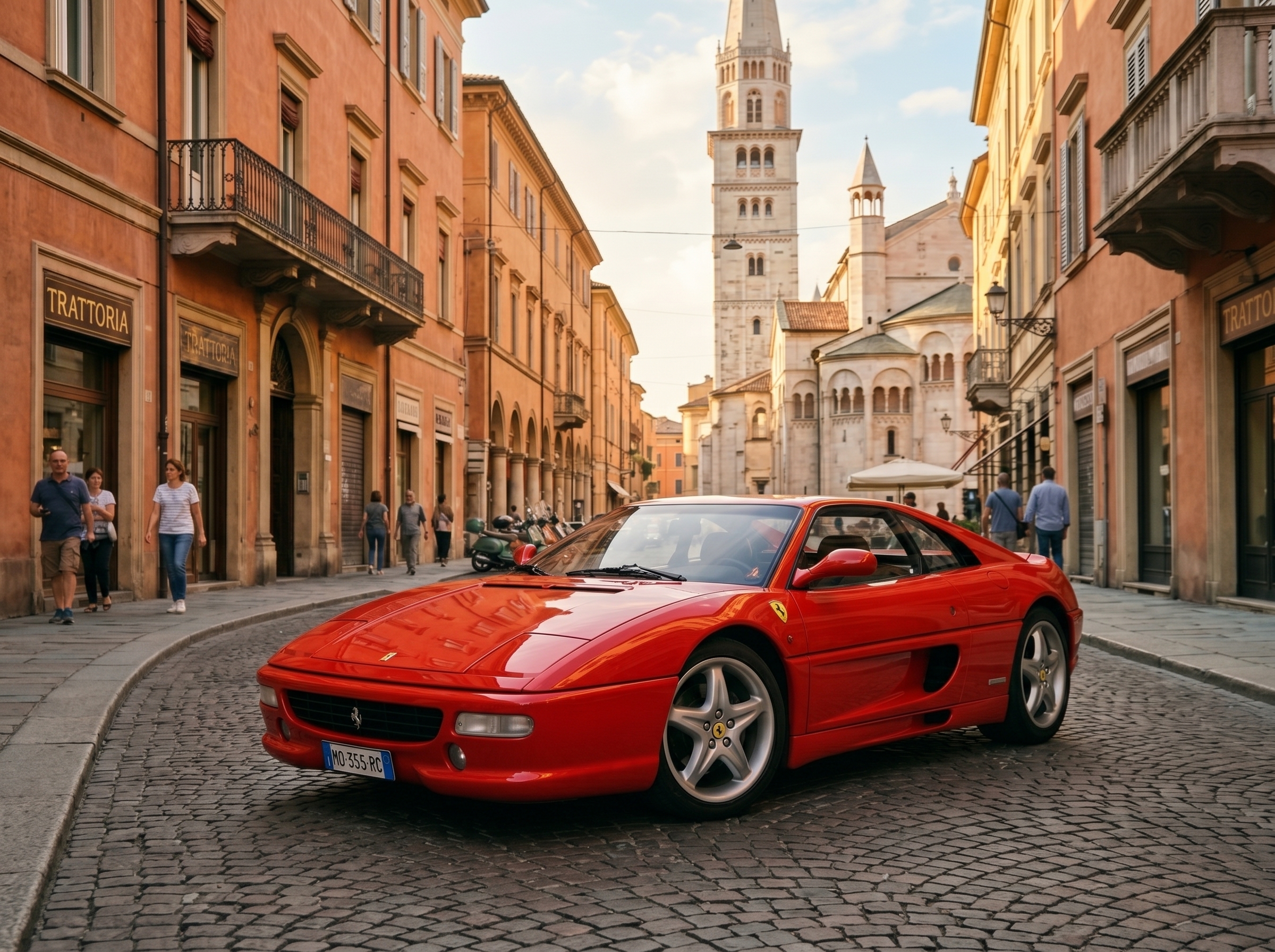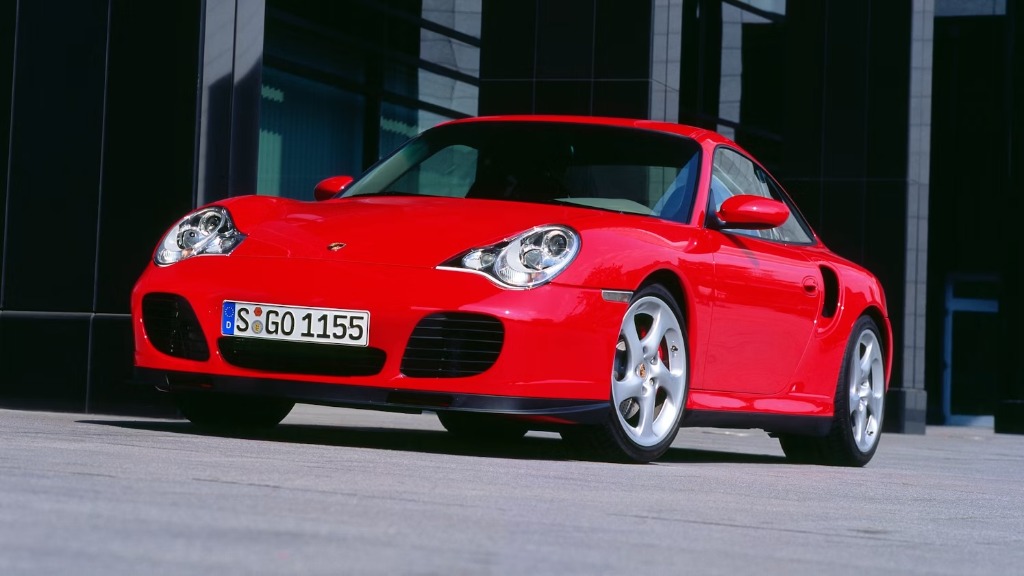
New vs. Used: Two Perspectives on Sports Cars

Buyer Psychology
The Investment Paradox: Why Today’s “Flaws” Become Tomorrow’s Gems
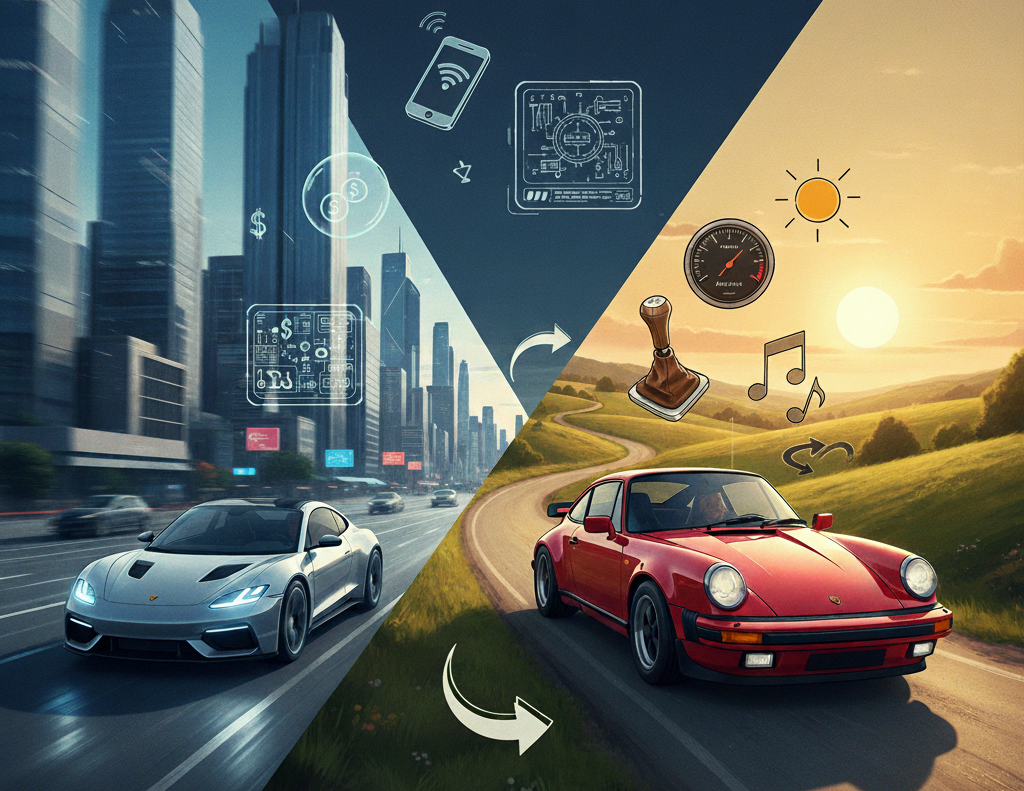
At mydriveROI, we seek to understand what transforms a simple used car into a profitable investment. The answer often lies in a fundamental misunderstanding between two worlds that don’t communicate: the one who signs the check at the dealership, and the one who will sign it 20 years later. Understanding this gap is understanding where the value is hidden.
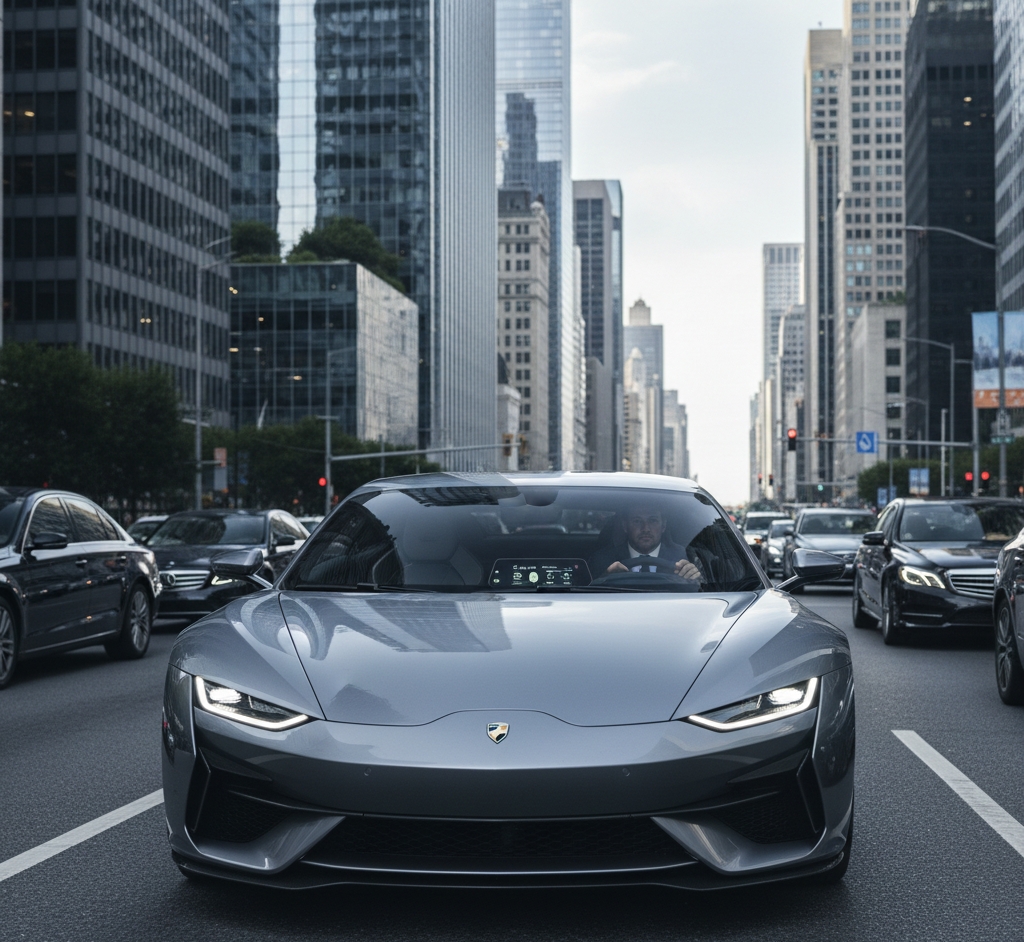
I. The New Car Buyer: The Tyranny of the Daily Grind and Status
When the car rolls out of the factory, its first owner has pragmatic and social priorities.
- Status Above All: They want the latest novelty. The car is a marker of social success. It must be “up-to-date.”
- Urban Convenience: Often using their vehicle in metropolitan areas, they demand convenience. They will tick the boxes for “Automatic Transmission,” “Adaptive Suspension,” and “Driver-Assistance Systems” to survive traffic jams.
- Tech-Addiction: They will pay a premium for the latest large touchscreen and connectivity, even though these gadgets will age very quickly.
Result: The market is flooded with highly assisted, technologically complex cars often lacking raw mechanical character.
Source : © mydriveROI.com
II. The “Gray Zone” (5 to 15 years): The Trap of Modernity
This is the stage the savvy investor watches with caution.
- The Intermediate Buyer: Second or third owners often seek to access the brand’s prestige at a lower cost, but with the same criteria as the new car buyer. They still want the car to look “modern.”
- Continued Depreciation: During this phase, expensive options (GPS, screens, complex automatic transmissions) massively lose their value because they become obsolete, yet they remain the market norm. This is where the car is just an “old used car.”
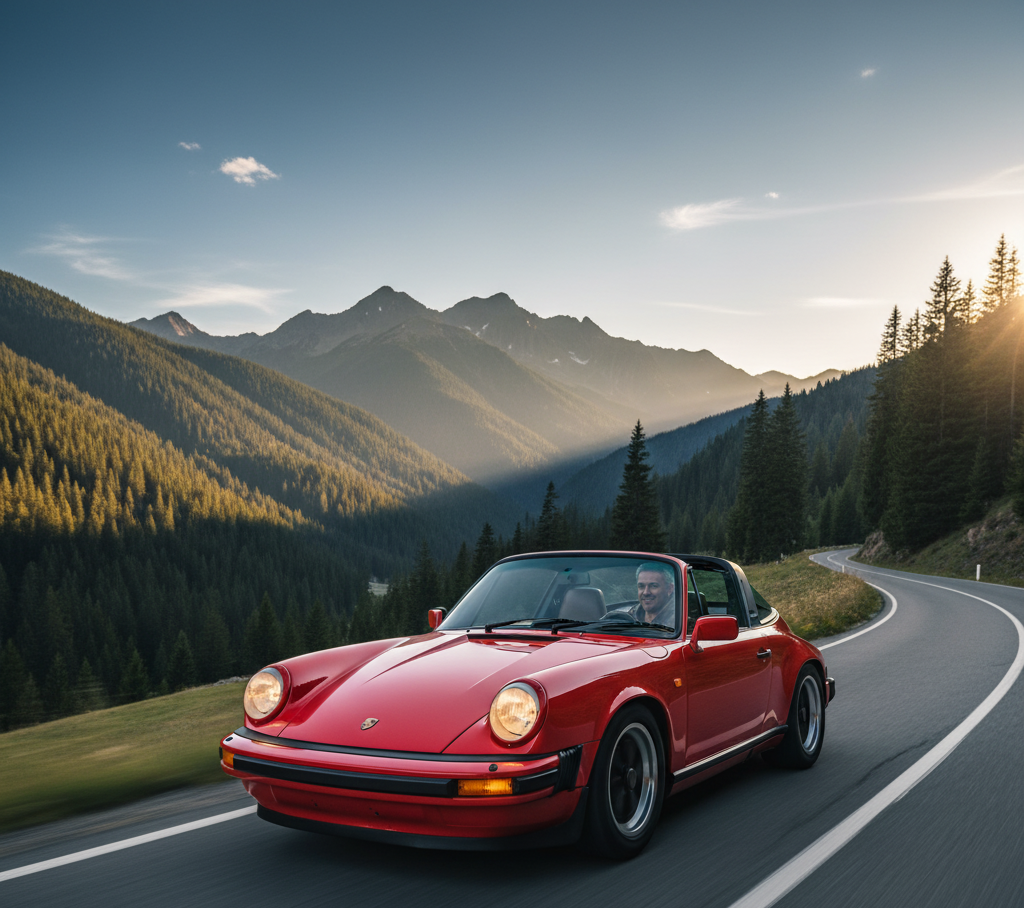
III. The Modern Classic Awakening: The Purist’s Revenge
Past the 10-20 year mark, the magic happens. The car’s status changes. It is no longer a means of transport; it becomes an adult’s toy. The buyer changes radically: that is you, the enthusiast.
- The Quest for Sensation: You are not looking to go to work in it. You are looking for the thrill of a Sunday morning. You want to feel the road in the steering wheel, hear the engine breathe without a turbo, and shift the gears yourself.
- Authenticity: Obsolete technology (the slow, old GPS) becomes a charming flaw or a detail that is ignored, in favor of mechanical quality.
Source : © mydriveROI.com
IV. The Secret to Appreciation: Betting on Programmed Rarity
This is where your investment makes perfect sense. The first buyer configured their car for comfort (90% automatic transmissions, heavy sunroofs, power steering). They unknowingly created the scarcity of the versions you desire today.
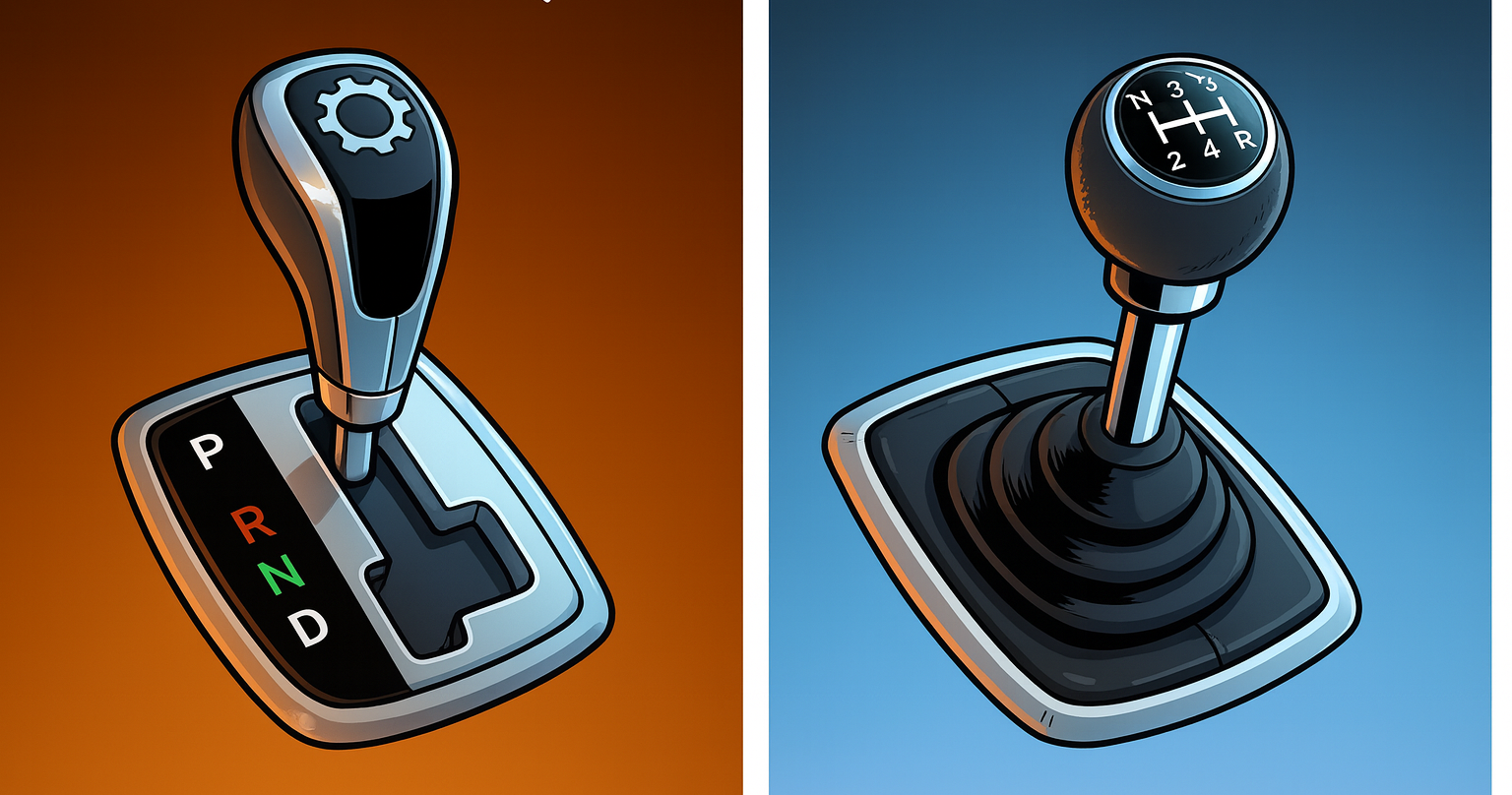
- The Manual Gem: Because it was shunned at the time for its “inconvenience” in the city, the manual transmission version is now hard to find. The law of supply and demand is relentless: what is rare and offers the most pleasure is worth more.
- Analog vs. Digital: The more new cars become computers on wheels, the more “analog” models (hydraulic steering, naturally aspirated engines) become safe haven assets.
mydriveROI advises you: Adapt your timing to the model’s sportiness. The timeframe for this transition from the “Gray Zone” to modern classic status and the appreciation of “purist” versions is not uniform. It heavily depends on the model’s level of sportiness and aura:
- For High-Performance Sports Cars and Icons: For the most radical and desirable cars (like certain Porsche GTs, special editions of BMW M, or Ferraris), the shift can be very fast. These vehicles can exit the “Gray Zone” and begin their strong appreciation as early as 5 to 10 years after their release. Purist demand is so strong and production so limited that the market reacts quickly.
- For “Mainstream” Sports Cars: For more widespread and less exclusive sports models (like a Golf GTI, or an entry-level Boxster), the process is slower. The car remains in the “Gray Zone” for a long time, where it is perceived as a simple used sports car. Significant appreciation often occurs only after 15 to 20 years, or more, once its utilitarian value has truly decreased and its mechanical purity has become a rare quality.
Conclusion for the Investor: To find the next car that will appreciate in value, look for yesterday’s “ugly duckling.” That sports car judged too radical, too noisy, or not equipped enough upon its release is exactly what the market will be clamoring for tomorrow. Your best ally is the bourgeois comfort of the first buyer: they are the one who made your future sports car so rare.
Source : © mydriveROI.com
V. Proof by Example: 5 Case Studies
To fully understand the mechanics, let’s look at the past. Here is how yesterday’s “comfort” destroyed value, and how “purity” made it skyrocket.
1. The BMW M3 E46 Case (2000-2006)
- The New Car Choice: At the time, the SMG-II robotic transmission was the height of technology, marketed as derived from F1. The majority of customers chose it for performance and status.
- The Collector’s Verdict: Today, the SMG gearbox is feared for its reliability and its dated driving feel. Versions with a manual transmission, which are rarer because fewer were ordered, are traded at a 20 to 30% higher premium.
2. The Ferrari 599 GTB Case
- The New Car Choice: An archetypal Grand Tourer, 99% of them were sold with the F1 Superfast automatic transmission for the comfort of wealthy clients.
- The Collector’s Verdict: The few rare examples (fewer than 30 worldwide) ordered with a manual transmission by stubborn purists are now worth millions, while the “standard” F1 versions cap out at a fraction of that price.
3. The Alfa Romeo 4C: “Unliveable,” Thus Essential
- The New Car Choice: Many avoided it upon release due to the lack of power steering (a nightmare in the city) and its spartan comfort.
- The Collector’s Verdict: It is precisely this lack of filter (direct mechanical steering) that makes it a highly sought-after vehicle for collectors today. What was a prohibitive flaw for daily use has become its major asset for appreciation.
4. The Porsche Boxster 986 (1996-2004): The Tiptronic Trap
The cheapest access to the Porsche world, but beware of the convenience trap.
- The New Car Buyer’s Choice: The Boxster was often bought as a weekend cruiser or for showing off in the city. A large part of the clientele checked the Tiptronic automatic transmission option (5 speeds, torque converter) to cruise with an arm out the window.
- The Investor’s Reality: This old automatic transmission completely numbs the engine and the driving sensations. It is an absolute turn-off for the purist. The Boxster with a manual gearbox has become the sole target for smart buyers.
- The Price Gap: Tiptronic models often remain the cheapest on the market (“bottom of the barrel”), while nice manual gearbox examples are beginning to slowly but surely see their value climb.
5. The Audi TT Mk1 (1998-2006): Look vs. Technique
A design icon, but two different experiences under the hood.
- The New Car Buyer’s Choice (180 hp FWD): The buyer mainly wanted the “look” of the concept car. They often bought the base version: 180 horsepower, front-wheel drive (FWD), sufficient for the city and cheaper.
- The Investor’s Reality (225 hp Quattro): The collector doesn’t care about the city. They want handling and efficiency. They only look for the 225 hp Quattro (all-wheel drive) version. It has a more sophisticated mechanical setup, dual exhaust tips (a distinguishing feature), and legendary handling.
- The Price Gap: The 180 hp FWD version stagnates at the prices of ordinary used cars, while the 225 hp Quattro (especially in good original condition) has firmly entered the growing Youngtimer category.
Related Insights

Similar Models
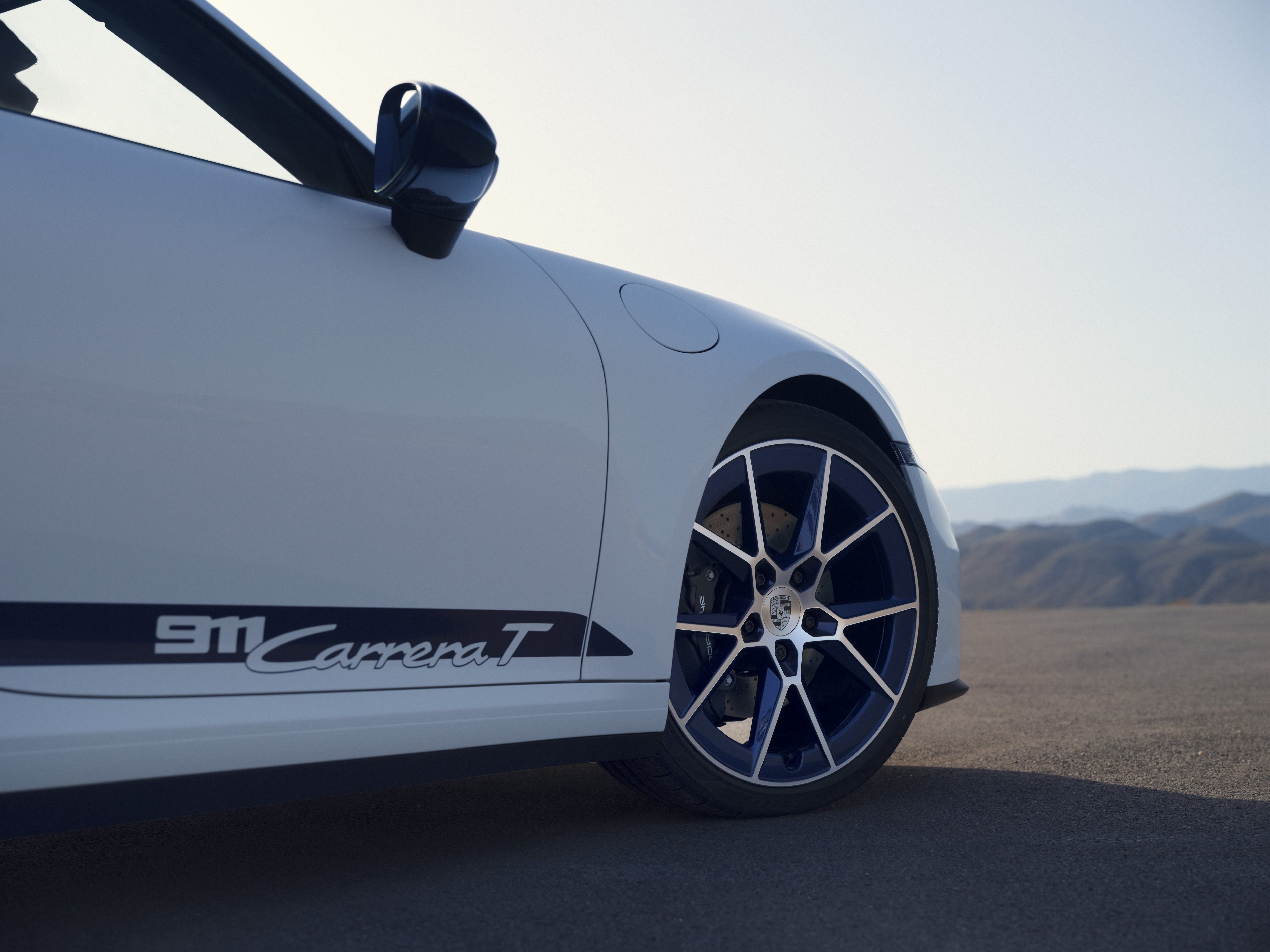
Porsche 911 (992.2) Carrera T: A Brand-New Gem in the Lineup
Porsche 911 (992.2) Carrera T