Impact of Poor Reliability on Value
Reliability and Complexity: Is the “Price of Fear” Your Best Ally?
For the passionate investor, understanding the massive value gap between a Porsche 911 type 996 (or 997.1) and its siblings (993 or 997.2) constitutes a masterful lesson in behavioral economics.
It’s not simply a question of performance; it’s a financial measure of fear.
The Porsche 911 Type 996 and 997.1 Case: The Market’s Punishment
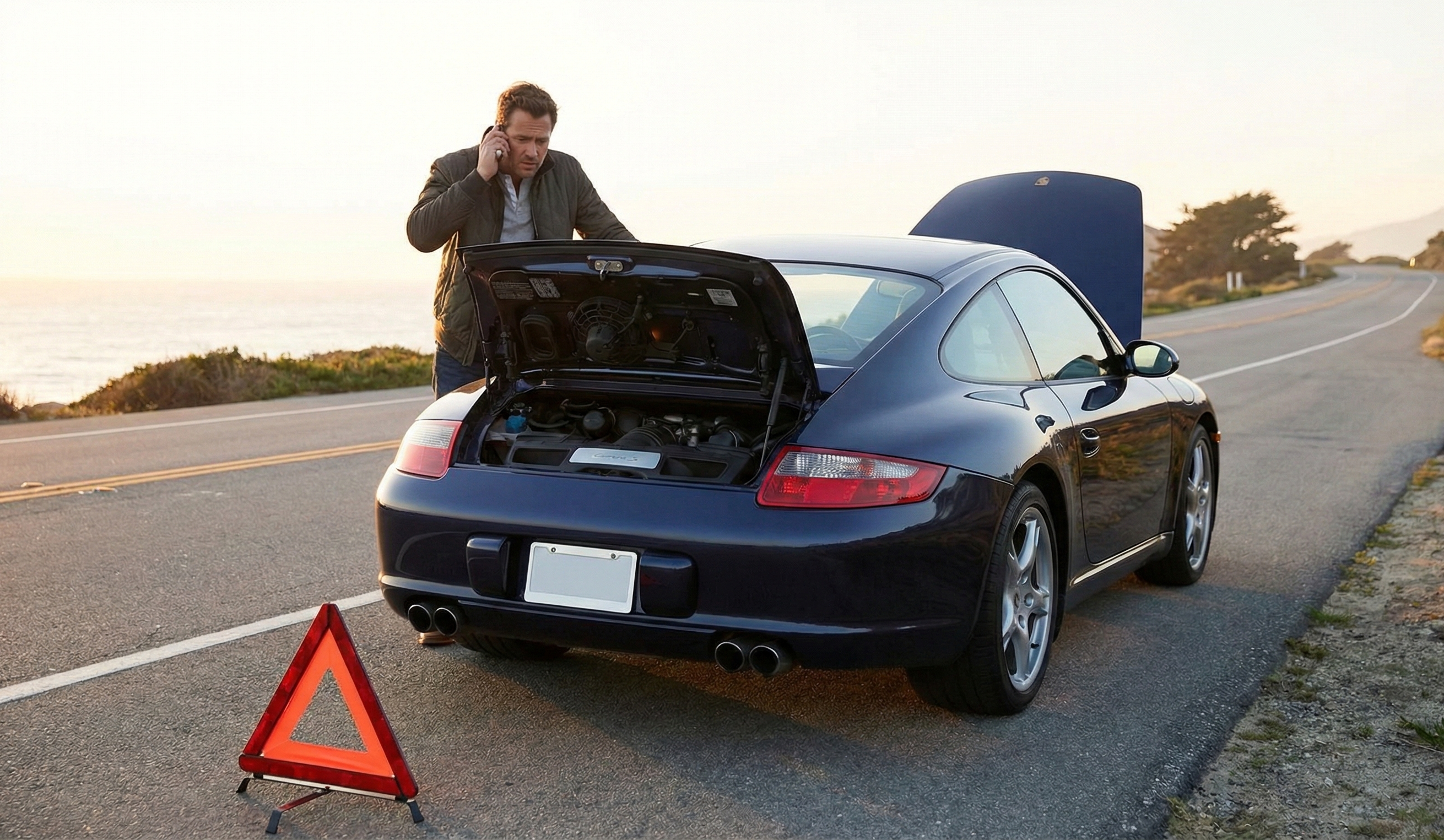
Market Analysis: The Paradox of Success Upon their launch, the Porsche 911 type 996 enjoyed resounding commercial success. New car buyers, confident in the ultra-robust lineage of the 993, praised these cars for their efficiency and versatility. (even though purists criticized the abandonment of air cooling and the shape of the headlights).
Source : © mydriveROI.com
The 996 generation introduced an all-new M96 engine in 1996-1997, featuring water cooling and wet sump lubrication. But the gradual revelation of weaknesses in the IMS (InterMediate Shaft) bearing and cylinder scoring acted as a slow poison on their image. The market overreacted, causing the value of these cars to plunge far below their intrinsic value in terms of performance. The following 911 model (997.1), launched in 2004, did not bring a notable reliability improvement since it largely carried over the same engines (M97) as the previous generation. It took until 2009 and the arrival of the new DFI direct injection engines, with a dry sump and no IMS bearing, to restore reliability worthy of the badge on the 997 phase 2 generation.
Should one avoid the 996 and 997.1 models because of their reputation?
No. It is better to “de-risk” the purchase.
These cars become a rational investment if the cost of making them reliable is integrated into the acquisition price.
- The IMS bearing: it’s a binary problem. Either it is original (risk), or it has been replaced by a reinforced solution. The history of invoices must provide proof of this. Common sense recommends replacing it with every clutch change.
- Cylinder scoring (Bore Scoring): an endoscopic test through the spark plug holes before purchase is useful on M96/M97 engines. When cars are affected, the most serious repair consists of cast iron sleeving of the block.
The Scale of Peace of Mind
The used market values “Proven Reliability” above all else.
When analyzing the value of 911s, a very strong correlation based on mechanical confidence is observed:
-
The 993 (The “Bulletproof” Myth): It benefits from the aura of indestructibility — sometimes exaggerated — of the air-cooled engines. The buyer pays a Legend Premium. They are buying the history and the perceived certainty that the value will never drop.
-
The 996 (The “Black Sheep”): This is where market inefficiency is most evident. These cars suffer a Fear Discount, compounded by perceived declining quality.
-
The 997.1 (“The Beauty Regained”): The return to lines appreciated by Porsche enthusiasts and a clear improvement in perceived quality do not completely mask the engine reliability issues, which are identical to those of the 996.
-
The 997.2 (The Technical Correction): This is the rational point of reference. With the introduction of the DFI (Direct Injection) engine in 2009, Porsche eliminated the intermediate shaft (IMS) and reintroduced dry sump lubrication. The 997.2 buyer pays a Tranquility Premium: they agree to overpay for the car (compared to a Phase 1) simply to no longer have to think about the word IMS.
Anatomy of the Discount: The Risk/Sanction Ratio
Why is the 996 so harshly punished?
It’s a question of risk perception.
- Information Asymmetry: Internet forums and media “noise” amplified the IMS problem. While the actual failure rate is estimated between 5% and 8% on certain models, the risk perception for the average buyer is close to 50%.
- The Financial Sanction: What frightens people is not the failure, but its cost. An engine failure on a car valued at $25,000 (the low price of a 996 a few years ago) represented 70% to 80% of the car’s value. This is a financial risk that the “family man” buyer refuses to take.
- Consequence: Demand collapses for non-upgraded models, creating an artificially low price floor. Buyers prefer to turn to a 997.2, even if it means paying $20,000 or $30,000 more, simply to avoid this potential $15,000 risk.
The Opportunity to Own the Legend at a Good Price
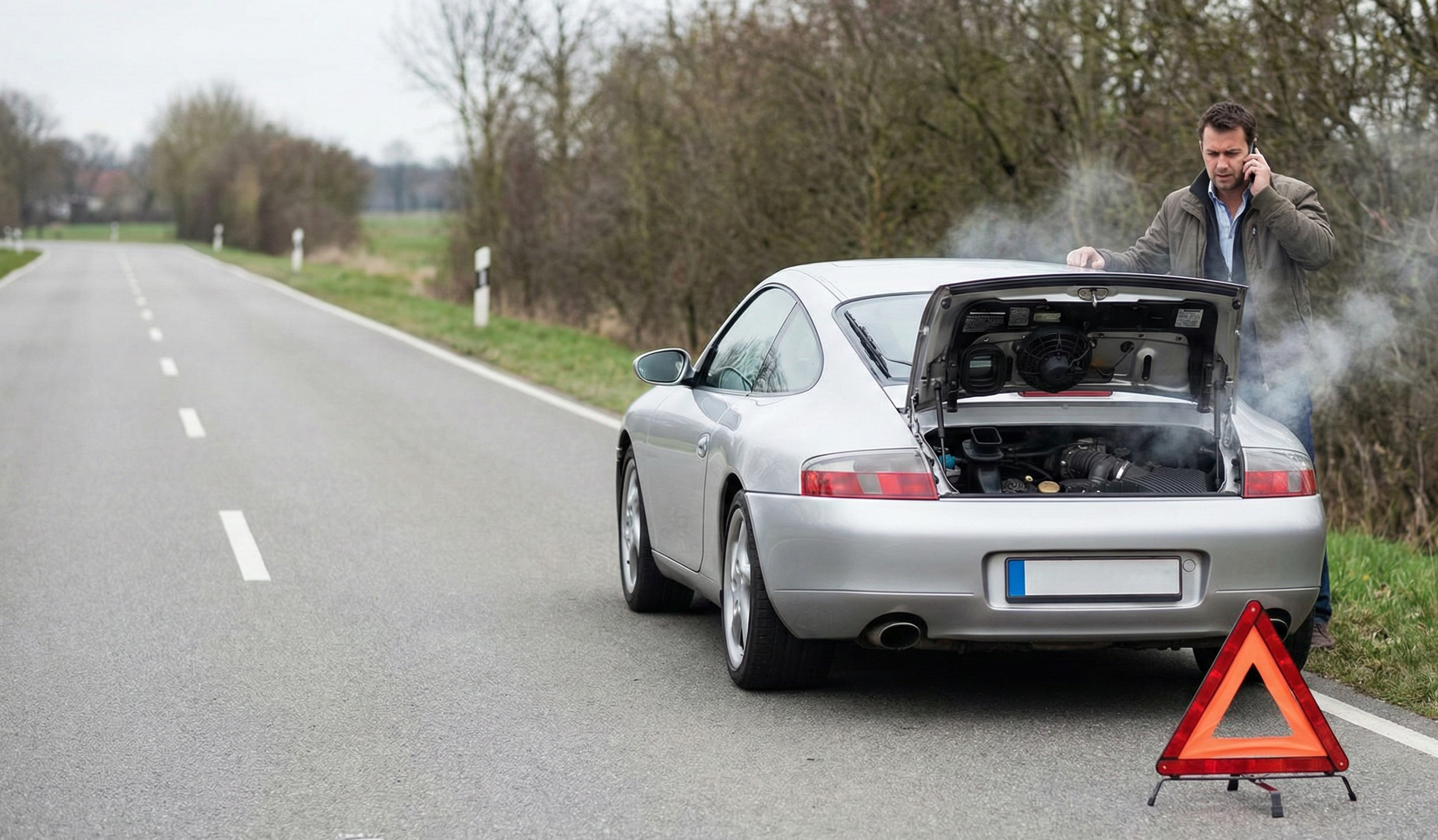
This is where the intelligent investor steps in. There is a market inefficiency when the extra cost of a reliable model (the “Delta” between a 996 and a 997.2) largely exceeds the cost of making the risky model reliable.
Source : © mydriveROI.com
Aside from the mechanical problems mentioned above, the 996 suffers from numerous small reliability defects.
The quality of body construction, interior, and electrics was very disappointing on the 996 generation, as Porsche aimed for mass production and economies of scale.
The 997 generation partially corrected this quality with Phase 1, then completely with Phase 2.
Let’s take a numerical example (estimated market values):
- Porsche 996 Carrera: ~$35,000 (value depressed by the IMS/cylinder risk and by construction quality deemed disappointing by brand regulars).
- Porsche 997.1 Carrera S: ~$55,000 (value depressed by the IMS/cylinder risk).
- Porsche 997.2 Carrera S: ~$75,000 (value supported by native reliability).
- The Gap: $20,000 between the 997s (.1 and .2) approximately corresponds to the cost of an engine rebuild.
For the 996, the gap is even larger and is explained by the numerous additional small problems that the 993s had not experienced.
It should be noted that a point explaining the high and rising value of the 997.2 is that they are relatively rare, as they were marketed for a shorter period and during the financial crisis from 2009 to 2011.
Sales figures are lower than those of the 997.1 and 996, which had enjoyed great commercial success.
The Investor’s Calculation:
If the complete reliability upgrade (reinforced IMS, low-temperature thermostat, or even complete engine rebuild with preventive sleeving in case of doubt) costs from $5,000 to $18,000, it should be known that upgraded 996 or 997.1 models are not worth more than those that are not.
And in no case will they reach the value of the 997.2: the delta will be maintained over time, corresponding approximately to the cost of an engine rebuild.
The trap would therefore be to buy a non-upgraded 996 or 997.1 at the normal price only to discover it has an engine defect shortly after. The engine rebuild will ruin your investment, with no chance of recovering the outlay in the medium term, even if the value slowly increases.
Our advice is to buy:
- either an already upgraded model (IMS and cast iron sleeved block) at the normal market price,
- or to obtain a discount on a non-upgraded model to finance the engine rebuild. In both cases, you will drive a reliable car that offers a driving pleasure and tactility that new models have lost since the 991. Prefer a manual gearbox (to change the IMS bearing with every clutch replacement) and to remain consistent with the marvelous tactility of cars from this generation.
A Great 911 at a Discount Price: The 996 and 997.1
The value gap between a 996 and a 997.2 is not justified by a proportional difference in driving pleasure (the chassis and ergonomics are very similar).
It is justified by the price buyers are willing to pay to sleep soundly.
Contrary to popular belief, the 996 is not a “small 911”: it is a great Porsche 911.
Don’t believe that an upgraded 996 will one day reach the value of a 997.2, but rather take advantage of the opportunity to access an excellent 911 at a discount price.
The Parallel with the Boxster
What we have illustrated with the 911 generations between 996 and 997.2 also occurred with contemporary Boxsters:
The Boxster 986 and 987.1 present the same problems as the 911 996 and 997.1, while the Boxster/Cayman 987.2 generation corrected the reliability exactly like the 911 type 997.2
The market reacted in the same way as for the equivalent 911s.
Our recommendations are therefore identical: you can enter the Porsche universe (986 and 987.1) for even less than with the equivalent 911s (996, 997.1), provided the model has been upgraded or the purchase price takes the residual risk into account.
The “General Public” Example: Mini Cooper S (R56) and the THP Syndrome
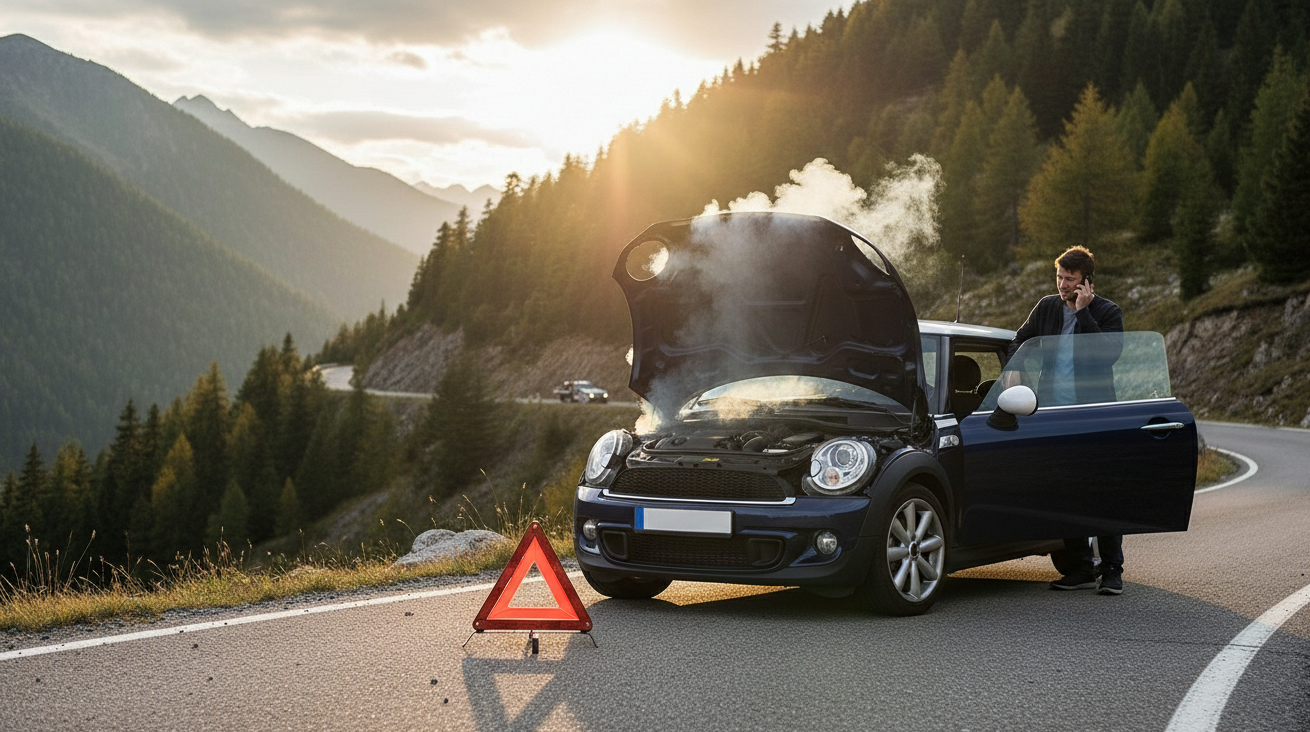
If the Porsche example seems elitist, the same “punishment by fear” phenomenon is observed on much more accessible vehicles. The textbook case is the second-generation Mini Cooper S (R56, 2006-2010), equipped with the famous 1.6L THP engine.
The Promise vs. The Reality
On paper, this car ticks all the boxes of our investment philosophy: a design icon, an inimitable “go-kart feeling,” and true sportiness.
It was a massive commercial success.
However, the catastrophic reputation of its timing system (the famous chain misalignment due to a faulty tensioner) acted as a violent deterrent in the used car market.
Market Inefficiency in Action
Today, a fascinating anomaly is observed:
- The Preceding (R53 - Compressor): Older, less powerful, and less comfortable, its value is rising because its supercharged “Tritec” engine is considered robust.
- The Following (F56 - BMW B48 Engine): Its regained reliability keeps its value very high.
- The R56 we are interested in (THP engine): It is in an abyssal trough. Rolling examples can be found at derisory prices, often 40% to 50% cheaper than an equivalent F56 generation.
The Passionate Investor’s Calculation
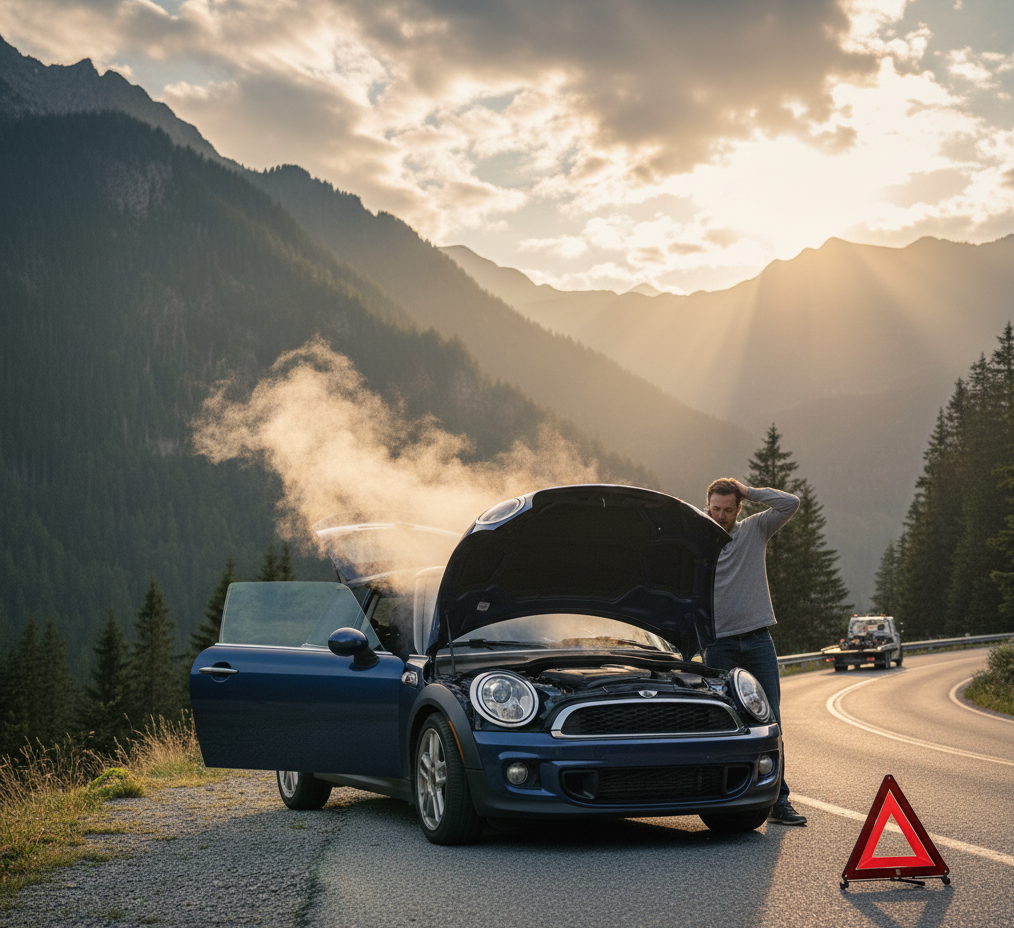
The general public market shuns the R56 because the average buyer fears the timing bill (between $1,000 and $1,500 for preventive replacement at a specialist). Be careful not to wait for the timing chain to break or misalign, as in that case the repair will be much more expensive.
Source : © mydriveROI.com
For the investor, this is a classic “Market Inefficiency”:
- The Arbitrage: Buying an R56 at a low price (the “fear discount” being greater than the cost of repair) and preventively replacing the complete timing system with the reinforced latest-generation kit allows one to obtain a sports car that is modern, performing, and now reliable for an unbeatable budget.
- The Strategy: Here, a “troublesome car” is transformed into an “undervalued performance car,” simply by solving the technical equation that the general public refuses to calculate.
⚠️ Don’t dream: the R56, even when upgraded, will not reach the value of the reputedly reliable F56.
But it allows one to afford an excellent pleasure car, with a beautiful image, for a very reasonable price.
mydriveROI Conclusion
Cars with a doubtful reliability reputation see their value negatively impacted by buyer fear.
Even when they are made reliable, don’t dream: their value will not catch up with that of models reputed to be reliable.
However, this kind of car still represents a pleasure investment opportunity, provided the model purchased is made reliable or acquired with a reduced price allowing the difference to be invested in reliability upgrades.
This strategy makes it possible to access a pleasure model whose value is rising, while securing the investment.
We took the example of the Porsche 911 type 996 or the Boxster type 986, which were unloved but are seeing a return to grace in their value.
The Mini Cooper S R56 is also unloved because of its engine’s timing chain.
Yet, once made reliable, it represents a very beautiful, exclusive car, with a driving pleasure that has become increasingly rare in current production.
Related Insights
Similar Models