Mercedes SLK 55 AMG (R171): The Naturally Aspirated V8 Roadster

Specifications
Basic Information
Performance & Value
A Singular Blueprint: Big V8 in a Compact Footprint
In the fall of 2004, Mercedes-Benz and its high-performance division AMG unveiled the second-generation SLK roadster (internal chassis code R171). Replacing the supercharged V6-powered SLK 32 AMG, the newcomer adopted a radical engineering approach for its class: shoehorning a massive 5.4-liter naturally aspirated V8 under the hood of a two-seat roadster measuring just 160.6 inches (4.08 meters) in overall length.
At the time, this philosophy departed sharply from its rivals. Porsche strictly confined the Boxster to flat-six power, BMW reserved its naturally aspirated inline-six for the Z4, and Audi relied on turbocharged engines or transverse VR6 layouts. By pairing a folding hardtop coupe-cabriolet body with the displacement of a full-size performance sedan, the Mercedes SLK 55 AMG (R171) forged a segment entirely its own. Built in 9,541 units between 2004 and 2010, it stands today as one of the most pragmatic collector propositions in the modern-classic sports car arena.
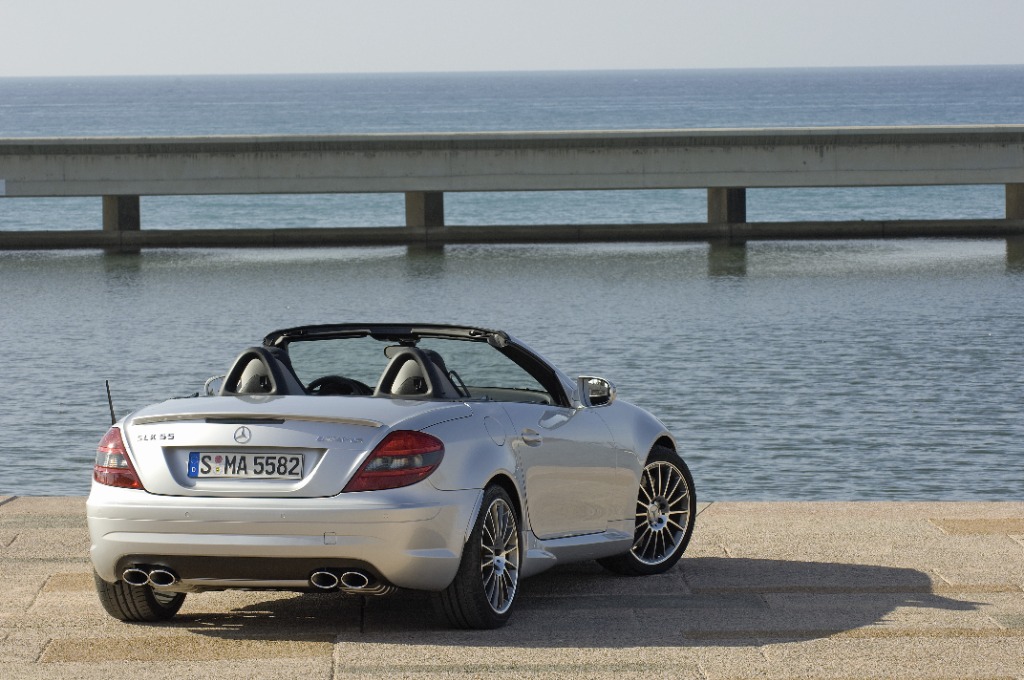
The Mercedes SLK 55 AMG (R171) top-down: muscular rear haunches, discreet apron housing quad AMG oval tailpipes, and fixed safety hoops behind the headrests.
Source: © Mercedes-Benz AG
Production History and Global Market Breakdown
Gauging the investment profile of the SLK 55 AMG requires understanding global delivery numbers and regional market distribution:
1. Global Production: 9,541 Units
Across its six-year production run, total build volume reached 9,541 units (excluding the track-focused 120-unit Black Series edition). This volume places the SLK 55 among AMG’s most widely delivered roadsters of the era, yet it remains significantly rarer than contemporaneous BMW M3s or Porsche Boxsters.
2. Breakdown by Geographic Market
- Europe (approx. 53% of volume, ~5,100 units): Germany and the United Kingdom represented the two dominant European destinations. European models were delivered with rich standard specifications and historically high service compliance.
- North America (approx. 37% of volume, ~3,500 units): US deliveries peaked sharply during the initial model years (832 units in 2005, 1,297 in 2006) before tapering off drastically in the wake of the 2008 financial crash (under 500 units annually between 2008 and 2010).
- Rest of the World (approx. 10%, ~900 units): Residual allocations headed primarily to Japan, Australia, and the Middle East.
| Market | Estimated Volume | Production Share | Notable Market Specs |
|---|---|---|---|
| Europe (EU + UK) | ~5,100 units | 53% | Comprehensive dealer service histories, predominantly silver/black colorways |
| United States / Canada | ~3,500 units | 37% | Concentrated in 2005–2006, speedometer in mph, amber bumper side markers |
| Rest of World (Japan, etc.) | ~900 units | 10% | Japanese examples frequently low-mileage and kept in left-hand drive configuration |
Mechanical Architecture: The Handcrafted M113 V8
The mechanical heart of the SLK 55 AMG is the M113.989 powerplant, hand-assembled in Affalterbach following AMG’s traditional “One Man, One Engine” creed, certified by a signed builder’s plaque mounted directly onto the composite engine cover.
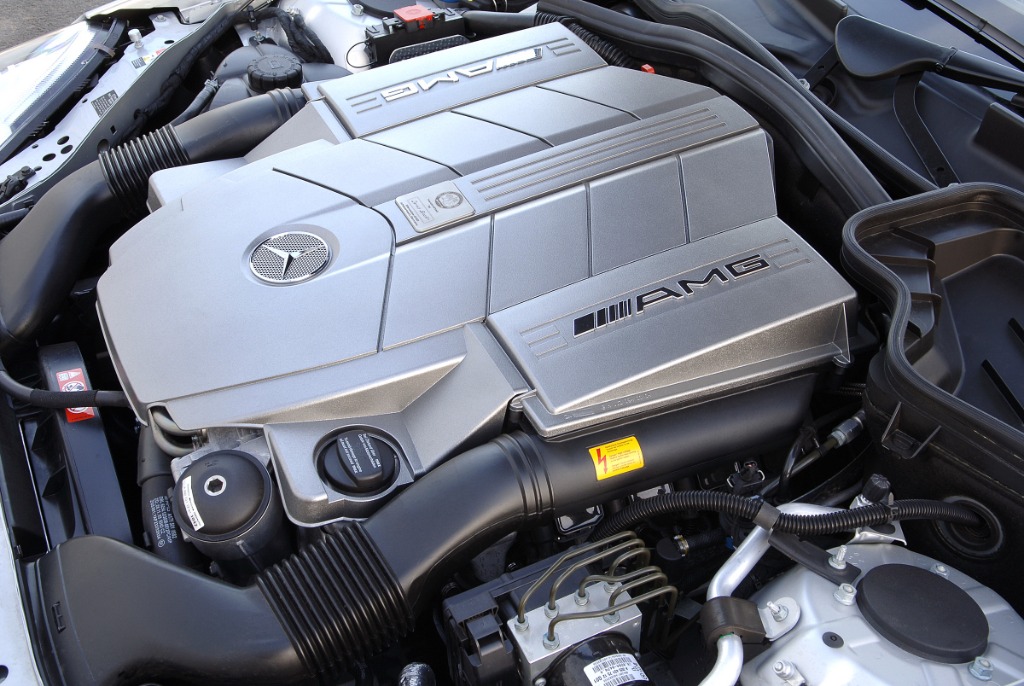
The SLK 55 AMG engine bay: the naturally aspirated 5.4-liter M113 V8 occupies nearly every inch of clearance under the hood, crowned by its magnesium intake manifold.
Source: © Mercedes-Benz AG
1. M113 Technical Specifications
- Displacement and Dimensions: 90-degree all-aluminum V8 displacing 5,439 cc (97.0 mm bore by 92.0 mm stroke) with an 11.0:1 compression ratio.
- 24-Valve Valvetrain: Single overhead camshaft per cylinder bank (SOHC) operating three valves per cylinder (two intake valves, one sodium-filled exhaust valve). This compact layout keeps the cylinder heads narrow while maximizing low-to-mid-range volumetric efficiency.
- Sequential Twin-Spark Ignition: Dual spark plugs per cylinder (16 spark plugs in total) fired with microsecond stagger to ensure clean combustion and reduced emissions.
- Output Figures: 355 hp (360 PS) at 5,750 rpm and 376 lb-ft (510 Nm) of peak torque at 4,000 rpm, with over 295 lb-ft on tap right from 2,000 rpm. The 0 to 60 mph sprint takes 4.7 seconds (0 to 100 km/h in 4.9 seconds), with top speed electronically capped at 155 mph (250 km/h), raised to 174 mph (280 km/h) with the Performance Package.
2. The 7G-Tronic Transmission (722.9 Gearbox)
The V8 sends power exclusively through Mercedes’ 7G-Tronic seven-speed torque-converter automatic transmission:
- Three Driving Modes: Comfort (second-gear starts, cushioned upshifts), Sport (higher shift thresholds), and Manual (steering-wheel-controlled gear selection).
- Steering Controls: Shift buttons positioned behind the wheel spokes on Phase 1 models (2004–2007), upgraded to solid aluminum shift paddles on facelifted Phase 2 cars (2008–2010).
- Driving Feel: The 7G-Tronic behaves seamlessly during urban cruising and interstate travel. Under aggressive canyon driving, however, it reflects the deliberate response times typical of mid-2000s torque-converter setups and cannot match modern dual-clutch speed.
3. Conventional Suspension and Mechanical Simplicity
Unlike the marque’s larger grand tourers, the SLK 55 relies on conventional, service-friendly hardware:
- Traditional Steel Springs: Classic coil springs and gas-pressurized dampers, utilizing a three-link front axle and a multi-link rear suspension.
- Conventional Hydraulic Brakes: Massive 6-piston fixed front calipers and 4-piston rear calipers on Phase 1 cars, completely bypassing complex brake-by-wire hydraulic systems.
Styling and Vario Roof Mechanism
Aesthetically, the R171 generation marked a clean break from the conservative lines of the original R170. Penned under design director Peter Pfeiffer with exterior styling led by Steve Mattin, the design drew direct inspiration from the Formula 1 nose cone of the Mercedes-Benz SLR McLaren supercar.
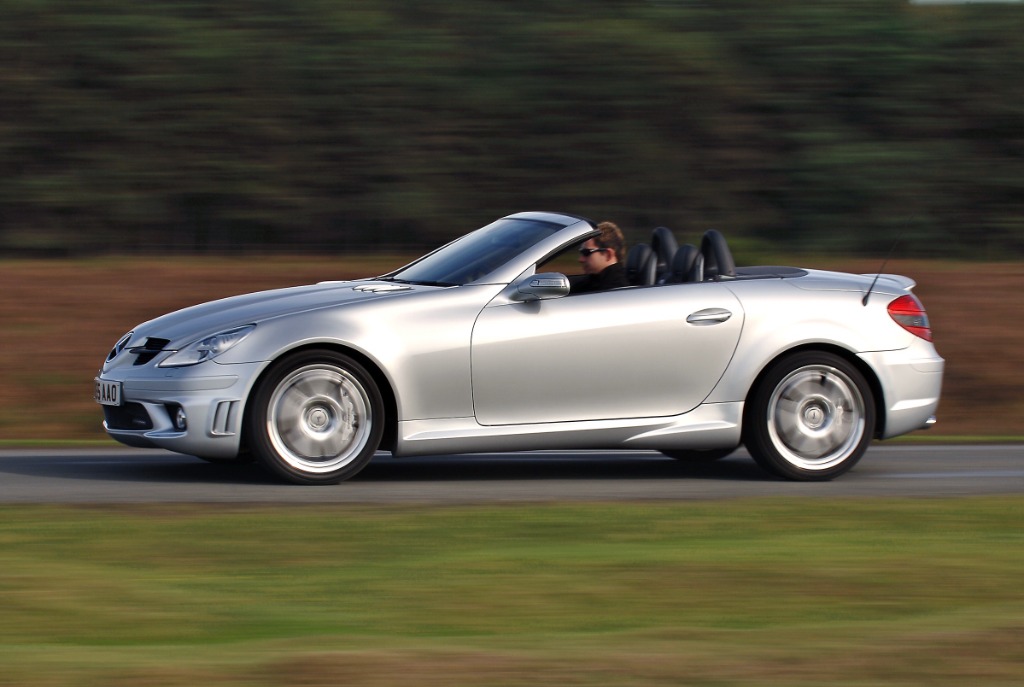
Athletic profile of the SLK 55 AMG: extended hood, rearward-biased cockpit, and quad AMG oval exhaust tips.
Source: © Mercedes-Benz AG
1. Distinctive Styling Elements
- F1-Inspired Nose: A pronounced center crease sweeping down the hood to form an arrow-shaped grille framing the oversized Mercedes star.
- AMG Front Fascia: Large lower cooling intakes paired with functional side extraction louvers.
- Tail and Exhaust: Understated rear diffuser framing quad chrome AMG oval tailpipes and a subtle decklid lip spoiler.
2. The Retractable Vario Hardtop
The electrohydraulic Vario folding hardtop converts the vehicle from a rigid coupe to an open-air roadster in 22 seconds:
- Driven by an electrohydraulic pump located in the trunk and a network of hydraulic cylinders.
- The rear glass window rotates 180 degrees during folding to nest neatly beneath the main roof panel, maximizing usable luggage capacity.
- Trunk volume measures 10.6 cu ft (300 liters) with the top up, dropping to 7.3 cu ft (208 liters) stowed, separated by a rigid luggage partition blind.
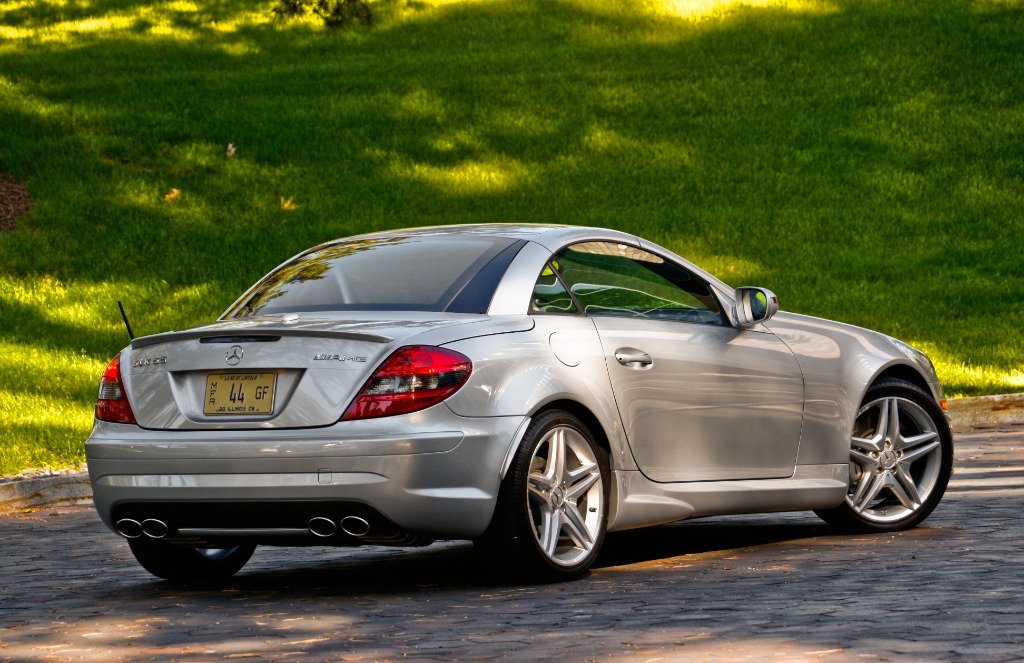
The SLK 55 AMG in closed coupe form: genuine coupe roofline rigidity combined with year-round acoustic insulation.
Source: © Mercedes-Benz AG
Cabin and Interior Ergonomics
The SLK 55 AMG interior provides a solid, purposeful cabin typical of 2000s Mercedes craftsmanship, pairing logical switchgear with AMG-specific appointments.
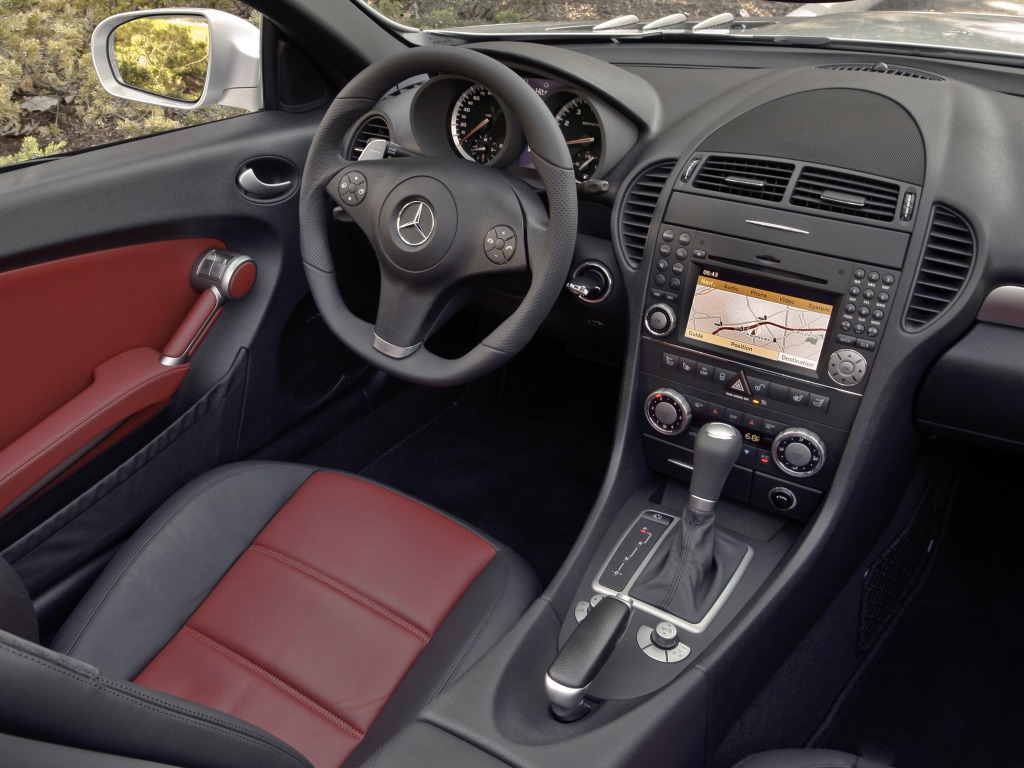
Driver-centric cockpit with AMG instrument cluster calibrated to 200 mph (320 km/h).
Source: © Mercedes-Benz AG
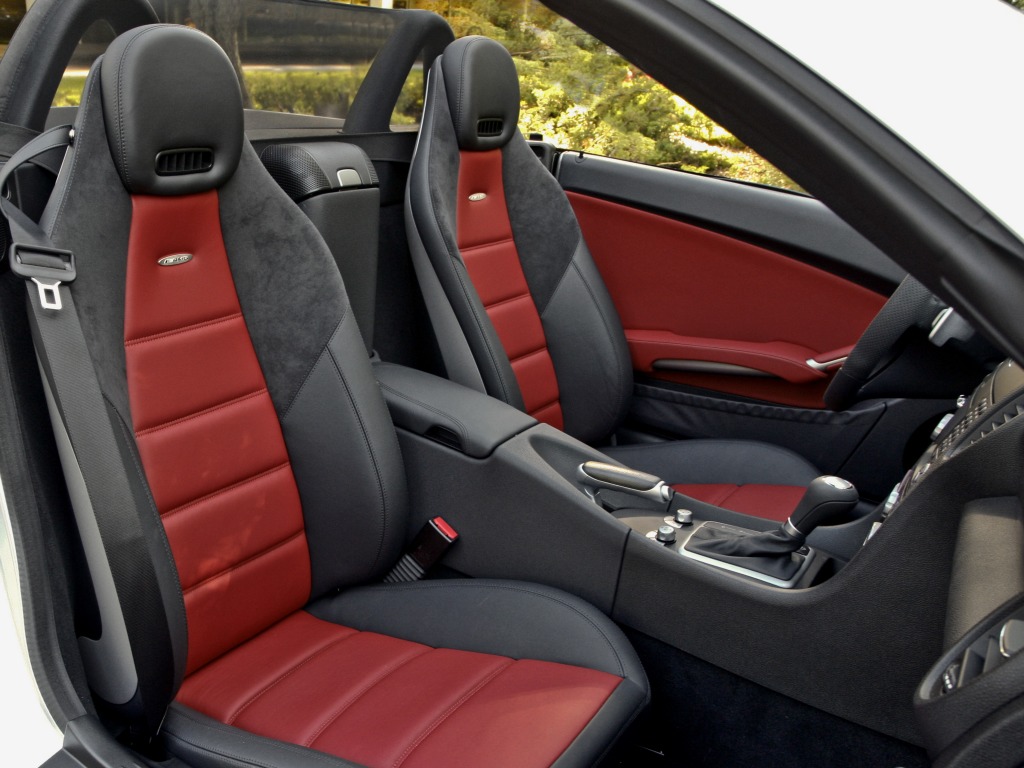
AMG sport seats in two-tone Nappa leather with integrated Airscarf neck warming vents.
Source: © Mercedes-Benz AG
1. AMG-Specific Features
- Integral Sport Seats: Heavily bolstered seats trimmed in thick Nappa leather (often two-tone black/red or black/silver), accented by silver metallic AMG badges on each backrest.
- Airscarf Neck Heating: A pioneering feature blowing warm air from vents embedded in the headrests directly onto passenger necks, extending top-down driving comfortably into cold autumn and winter mornings.
- Instrumentation: Deep chrome-ringed gauge binnacles housing a 200 mph (320 km/h) speedometer and an analog clock-flanked tachometer featuring AMG lettering.
Generation Breakdown: Phase 1, Phase 2 Facelift, and P30 Performance Package
Prospective buyers must distinguish between two production phases and several factory configurations:
1. Phase 1 (2004–2007)
- Launch model characterized by large front bumper mesh side vents, oval side mirrors, and a four-spoke steering wheel with rear-mounted shift shift buttons.
- Braking System: Massive 6-piston fixed front calipers clamping 340 mm cross-drilled rotors, paired with 4-piston rear calipers on 330 mm discs.
2. Phase 2 Facelift (2008–2010)
Unveiled at the 2008 Detroit Auto Show, the facelift introduced subtle cosmetic and mechanical refinements:
- Front End: Redesigned bumper with an arrow-shaped black lower splitter insert, chrome-ringed fog lamps, and modified grille mesh.
- Mirrors: Sleeker wing mirrors with arrow-shaped LED turn signals.
- Interior: Three-spoke flat-bottom sport steering wheel fitted with true aluminum shift paddles, updated red gauge needles, and the updated NTG 2.5 COMAND multimedia interface (hard-drive-based navigation, integrated Bluetooth).
- Braking Change: Front 6-piston calipers replaced by 4-piston fixed calipers on 345 mm one-piece rotors, lowering dealer maintenance and pad replacement costs.
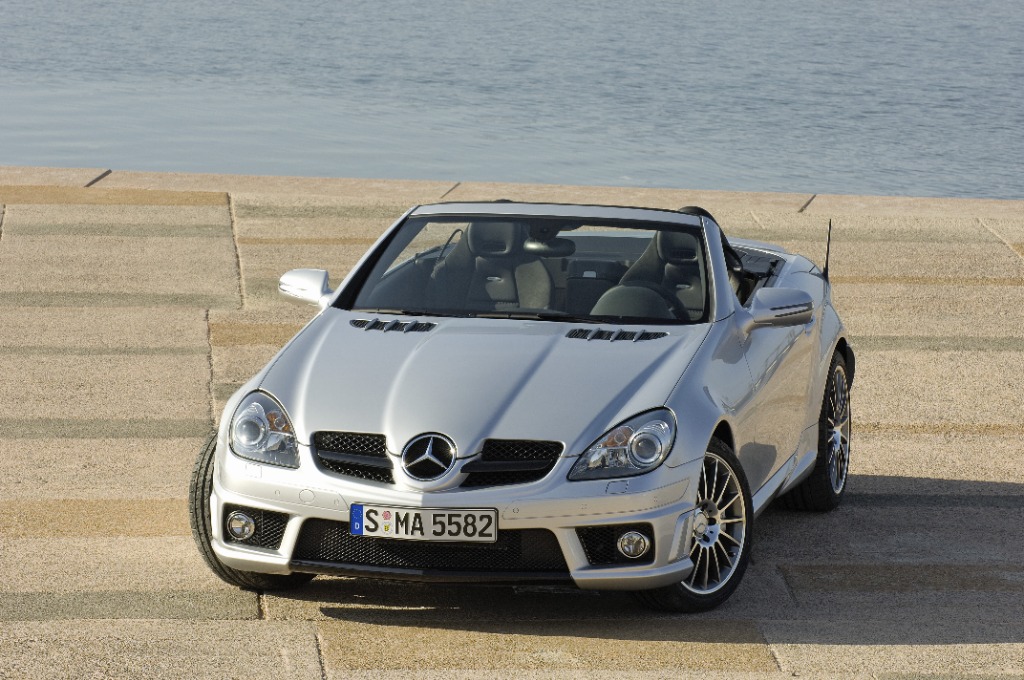
Phase 2 facelift (2008–2010): sharpened front bumper with black lower arrow intake, chrome-bezeled fog lights, and revised LED mirror housings.
Source: © Mercedes-Benz AG
3. The AMG Performance Package (Option Code P30): The Collector’s Choice
Developed by the AMG Performance Studio in Affalterbach beginning in late 2005, the P30 Package was produced in approximately 1,000 units worldwide:
- Chassis and Suspension: Nürburgring Nordschleife-tuned stiffer springs and dampers, dropping ride height by 10 mm.
- Limited-Slip Differential: Mechanical multi-disc LSD with 45% locking under load, radically curing inside-wheel spin out of tight bends.
- Composite Front Brakes: Two-piece 360 mm floating compound brake discs (aluminum hats paired with cast-iron friction rings) to reduce unsprung weight.
- Bespoke Wheels: 18-inch two-piece multi-spoke modular forged AMG alloys with visible perimeter titanium bolts.
- Interior: Alcantara-trimmed AMG Performance steering wheel.
- Market Impact: Verified factory P30 examples command a 20% to 30% price premium over standard cars.
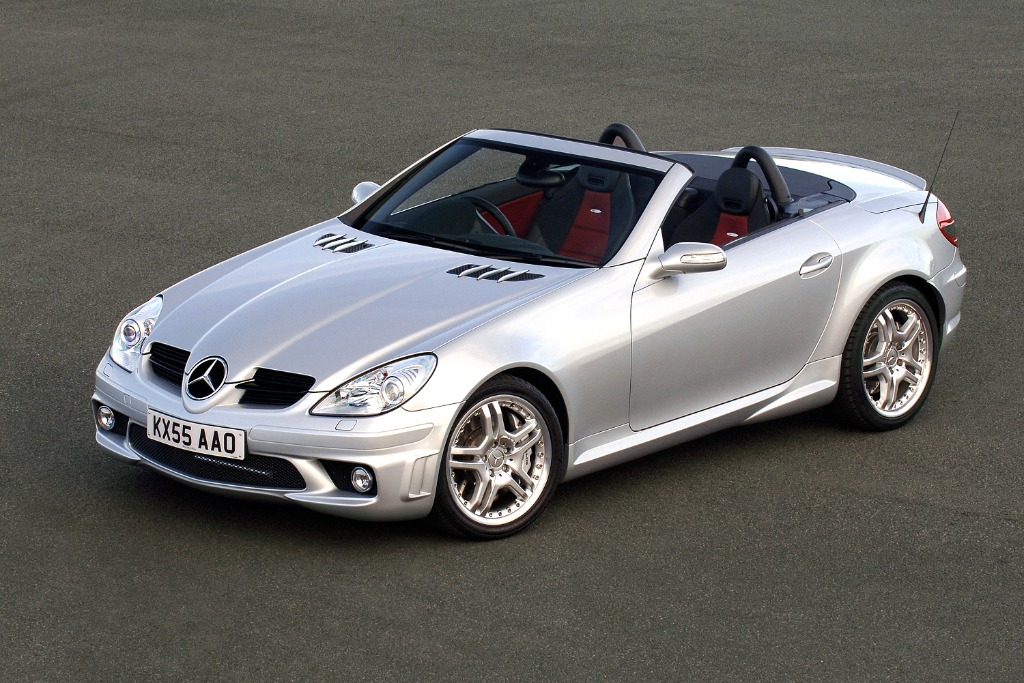
Factory P30 Performance Package setup: 18-inch two-piece modular AMG wheels with perimeter hardware, 10 mm lowered stance, and 360 mm front composite brake rotors.
Source: © Mercedes-Benz AG
[!NOTE] The Rare Black Series (2006–2007):
Produced in just 120 units, the SLK 55 AMG Black Series was a hardcore track special: a fixed carbon-fiber roof (deleting the folding mechanism and shaving 100 lb / 45 kg), an upgraded 400-hp M113 V8, flared composite fenders, and adjustable coilover suspension. It trades in a six-figure collector bracket well north of $110,000 / €100,000.
Behind the Wheel: Driving Character and On-Road Dynamics
On pavement, the SLK 55 AMG does not pretend to match the surgical razor-edge agility of a mid-engine platform. It delivers an unmistakably muscular grand touring experience defined by effortless mechanical torque:
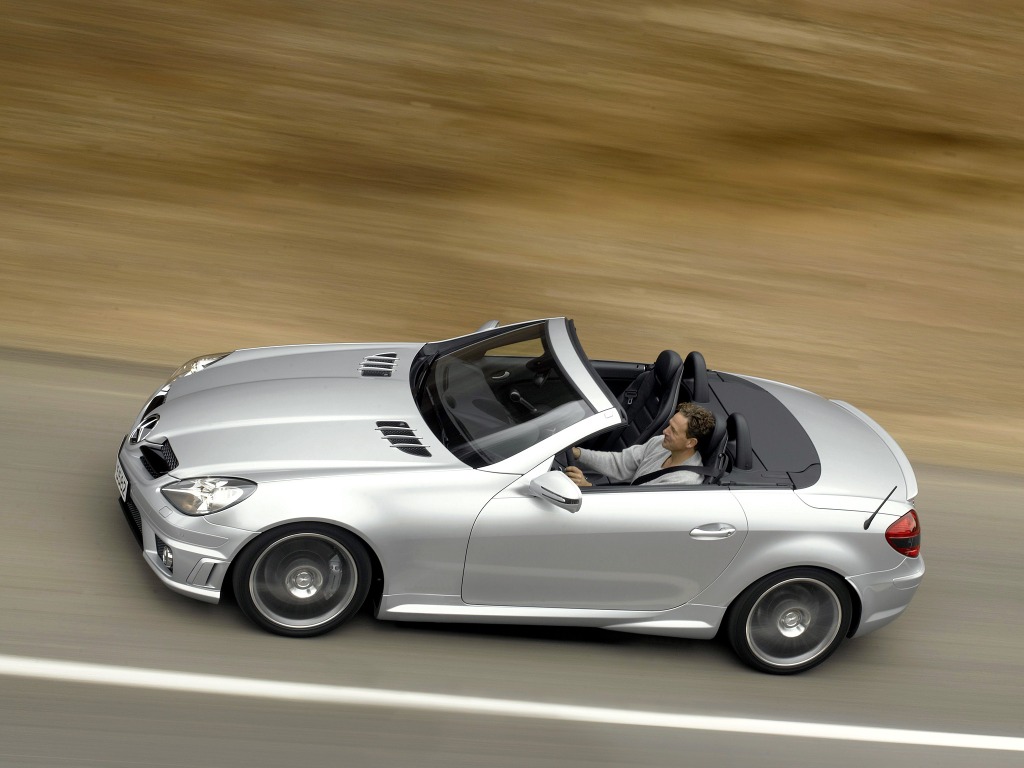
On open roads: linear power delivery and relentless low-end torque from the naturally aspirated M113 V8 define its muscle-roadster character.
Source: © Mercedes-Benz AG
1. Naturally Aspirated V8 Power Delivery
At ignition, the M113 fires up with an authoritative, deep baritone bark. Free of turbo lag, throttle response is instantaneous and buttery smooth. With 376 lb-ft of torque, highway passing requires no frantic downshifting—a modest squeeze of the pedal surge-charges the car forward effortlessly. Above 5,000 rpm, the exhaust note sharpens into a clean, mechanical brass crescendo.
2. Handling Balance and Traction
- Front-End Precision: Despite housing a large V8, weight distribution sits around 54% front and 46% rear. The nose points accurately during brisk street driving, though pushing near the grip threshold on tight autocross layouts induces natural understeer.
- Rear-End Traction: On standard open-differential models, the traction control (ESP) intervenes frequently under hard corner exit on damp asphalt. Cars equipped with the P30 limited-slip differential transform the driving experience, allowing progressive throttle-steered rotation.
- Ride Quality: Standard damping strikes an agreeable balance between body control and bump compliance. With the hardtop deployed, interior noise suppression equals that of a dedicated coupe.
Reliability and Pre-Purchase Inspection (R171)
The M113 engine is widely respected for bulletproof longevity, with well-serviced examples routinely surpassing 150,000 miles (250,000 km) without major surgery. Nevertheless, aging mechanicals require a thorough inspection:
1. M113 Engine: Gaskets and Sensors
- Valve Cover Gaskets: Over time, rubber gaskets harden from heat cycles, leaking oil onto the exhaust manifolds and causing a telltale burnt oil smell in the cabin. Replacement is straightforward and relatively inexpensive.
- Crankshaft Position Sensor (CPS): A classic failure across this generation. Symptoms typically include sudden engine stalling or failure to restart once the engine is warm, while cold starts remain normal. A quality Bosch replacement sensor costs under $60 and can be installed in under an hour.
- Crankshaft Harmonic Balancer: The bonded rubber damper ring inside the crankshaft pulley can degrade and wobble. Inspect visually for dry rot or separation to avoid belt damage.
- Twin-Spark Ignition (16 Spark Plugs): Replacing all 16 plugs along with their ignition wire sets involves significant labor (budget $400 to $600 / €350 to €500). Verify service invoice dates carefully.
2. 7G-Tronic Automatic Transmission (722.9): Conductor Plate Issues
Early 722.9 transmissions (2004–2007) frequently experienced failures of the internal electronic conductor plate (TCU/ISM) inside the valve body:
- Symptoms: Transmission slipping into limp-home mode (locked in 2nd gear or reverse) accompanied by a Check Engine Light. Trouble codes typically flag speed sensor faults (Y3/8n1 or Y3/8n2).
- Remedy: Rebuilding the conductor plate via specialized shops or replacing the complete valve body assembly ($900 to $1,600 / €800 to €1,500).
- Preventative Maintenance: Insist on verified transmission fluid and filter flushes every 40,000 miles (60,000 km) using genuine Mercedes-Benz ATF 134 specification fluid.
3. Vario Roof Electrohydraulic System
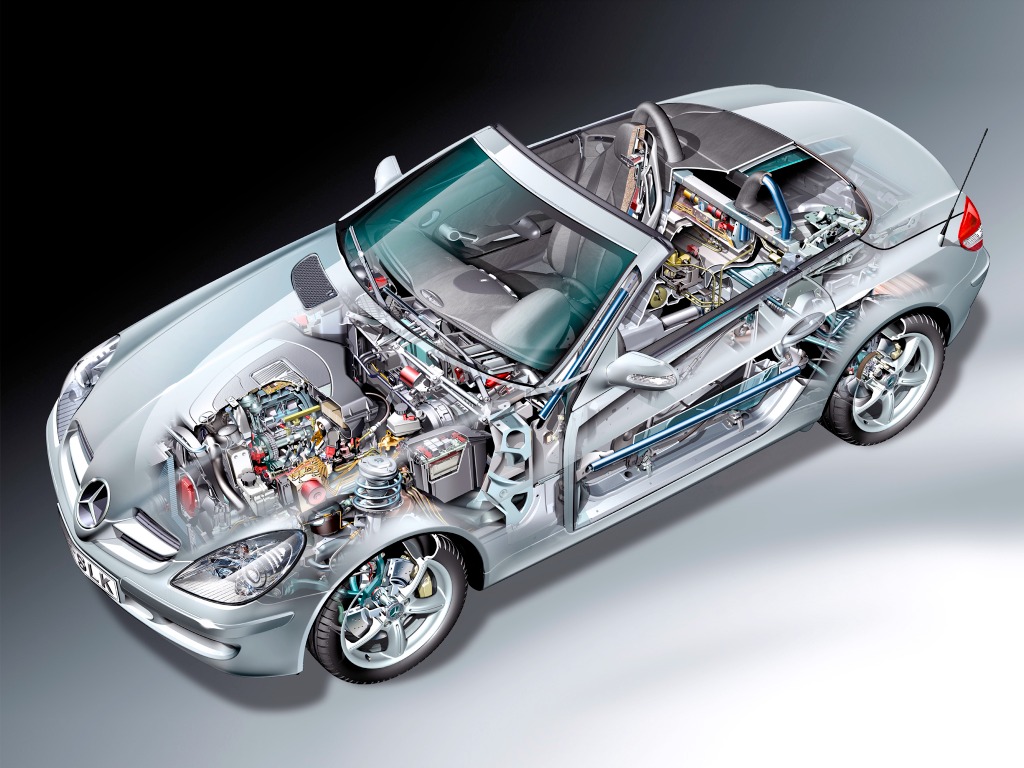
Technical cutaway: body structure, fuel tank placement, and trunk hydraulic pump integration.
Source: © Mercedes-Benz AG
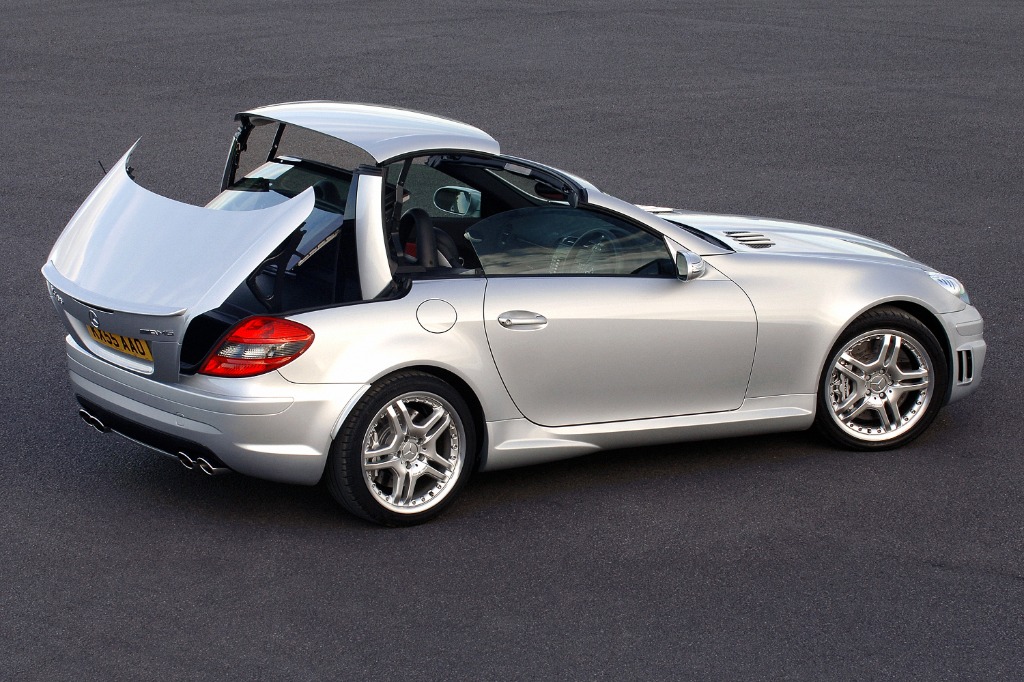
Vario roof operation: 22-second cycle driven by hydraulic rams and a central pump.
Source: © Mercedes-Benz AG
- Hydraulic Cylinders: Check carefully for leaks from the front roof lock cylinder located above the rearview mirror. O-ring degradation causes hydraulic fluid to stain the headliner fabric.
- Position Microswitches: Dirty or misaligned limit switches can pause the roof cycle midway.
- Rubber Weatherstripping Care: Roof and header seals must be treated annually with specialized lubricant (such as Krytox or Gummi-Pflege) to preserve flexibility and prevent wind whistle.
4. Running Gear and Brakes
- Front Control Arm Bushings: The front-heavy V8 works lower thrust arm bushings and ball joints hard. Clunking over road imperfections or vague steering tracking flags worn components.
- Brake Hardware Costs: On Phase 1 6-piston setups and P30 360 mm composite two-piece discs, replacement rotor and pad hardware costs are significant ($900 to $1,500 / €800 to €1,400 for front axle parts).
Maintenance Budget and Ownership Costs
Annual upkeep through independent European specialist shops keeps ownership costs modest compared to other 5.0L+ performance vehicles:
| Maintenance Item | Recommended Interval | Estimated Cost Range |
|---|---|---|
| Engine Oil & Filter Service (9.0 qt / 8.5 L 0W-40/5W-40 MB 229.5) | Annual or every 7,500–10,000 miles | $200 – $350 / €250 – €350 |
| 16 Spark Plugs Replacement | Every 4 years or 40,000 miles | $400 – $600 / €350 – €500 |
| 7G-Tronic Transmission Service (Fluid, filter, gasket) | Every 40,000 miles (60,000 km) | $450 – $650 / €450 – €600 |
| Front Brake Pads & Rotors (Standard Phase 1 / Phase 2) | As needed | $650 – $950 / €600 – €900 |
| P30 Composite Front Brake Rotors & Pads | As needed | $1,200 – $1,600 / €1,100 – €1,400 |
| Rear Tires (245/35 R18, pair) | 10,000 – 15,000 miles | $350 – $450 / €280 – €380 |
Real-World Fuel Economy:
- Interstate Highway Cruising at 75 mph (120 km/h): 22 to 25 mpg US (9.5 to 11.0 L/100 km) thanks to the tall 7th gear overdrive.
- Mixed Spirited Driving: 15 to 18 mpg US (13.5 to 16.0 L/100 km).
Market Outlook and Investment Potential (R171)
After reaching its price trough between 2016 and 2020 (around $18,000 to $24,000 / €18,000 to €22,000), the Mercedes SLK 55 AMG R171 stabilized on a solid foundation, showing clear tiering based on specification:
1. Price Benchmark Matrix (Europe / US Market)
- $20,000 – $25,000 (€22,000 – €26,000): Higher-mileage examples (> 100,000 miles / 160,000 km), incomplete service books, or minor cosmetic wear.
- $26,000 – $34,000 (€27,000 – €33,000) (Core Market): Clean, accident-free cars with 50,000 to 80,000 miles (80,000 to 130,000 km) and documented maintenance records.
- $35,000 – $45,000 (€34,000 – €42,000): Exceptionally low-mileage Phase 2 facelift models (< 35,000 miles) or genuine documented P30 Performance Package cars.
| Specification & Years | Engine / Output | Est. Build Volume | Average Market Value | Investment Profile |
|---|---|---|---|---|
| SLK 55 AMG Phase 1 (2004–2007) | 5.4L M113 V8 (355 hp) | ~7,000 units | $25,000 – $32,000 | Accessible entry point, 6-piston front brakes, iconic SLR nose |
| SLK 55 AMG Phase 2 (2008–2010) | 5.4L M113 V8 (355 hp) | ~2,500 units | $32,000 – $38,000 | Flat-bottom wheel, updated NTG 2.5 multimedia, rare facelift build |
| SLK 55 AMG P30 Package (2006–2010) | M113 + 45% Limited-Slip | ~1,000 units | $36,000 – $45,000 | Prime collector spec: mechanical LSD, 360 mm composite brakes, modular alloys |
| SLK 55 AMG Black Series (2006–2007) | 5.4L M113 V8 (400 hp) | 120 units | $110,000 – $160,000+ | Elite blue-chip collectible (fixed carbon roof, track chassis) |
Market Alternatives: Direct Rivals, The Big Brother SL, and The R172 Successor
When considering an SLK 55 AMG R171, buyers evaluate three distinct competitive paths:
1. Contemporary Rivals: Porsche Boxster and BMW Z4
On the secondary sports car market, the SLK 55 confronts two entirely different engineering philosophies: mid-engine precision and front-engine inline-six agility.
From a purchase-price standpoint, the market comparison is particularly instructive:
| Model & Engine | Power & Weight | Drivetrain Layout | Real-World Market Value | Advantages vs. SLK 55 | Disadvantages vs. SLK 55 |
|---|---|---|---|---|---|
| Mercedes SLK 55 AMG (R171) (5.4L NA V8 M113) |
355 hp / 376 lb-ft 3,395 lb (1,540 kg) |
Front-engine RWD, folding hardtop, naturally aspirated V8 | $26,000 – $35,000 | V8 muscle, 376 lb-ft low-end punch, proven reliability, folding hardtop security | 7G-Tronic shifts slower on track, heavier front axle |
| Porsche Boxster S (986) (3.2L NA Flat-6 M96) |
250–258 hp / 228 lb-ft 2,910 lb (1,320 kg) |
Mid-engine RWD, soft top | $18,000 – $28,000 | Unmatched mid-engine balance, tactile manual steering | M96 catastrophic engine failure risks (IMS, bore scoring), brittle interior plastics |
| Porsche Boxster S (987.2) (3.4L NA Flat-6 DFI MA1) |
310 hp / 265 lb-ft 2,987 lb (1,355 kg) |
Mid-engine RWD, soft top | $38,000 – $50,000 | Surgical handling, IMS-free engine, rapid PDK gearbox | $10,000+ higher acquisition cost, modest low-rpm torque, confined engine bay |
| BMW Z4 3.0si (E85/E86) (3.0L NA Inline-6 N52) |
255 hp / 232 lb-ft 2,880 lb (1,310 kg) |
Front-engine RWD, roadster/coupe | $18,000 – $26,000 | 500 lb lighter curb weight, free-revving N52, manual availability | Significant power deficit (-100 hp), lacks V8 sonic presence |
👉 Compare further: Read our dedicated investment guides on the Porsche Boxster S 987.2 and the BMW Z4 3.0si E86.
The Porsche Boxster Duel: Pure Dynamics vs. Mechanical Peace of Mind
Buyers weighing Porsche against AMG encounter a fundamental tradeoff between driver engagement and ownership peace of mind:
- The Direct Budget Rival: Boxster S (986) – Peace of Mind Favors the SLK
In raw track agility, the 986 Boxster S remains untouchable: low center of gravity, mid-engine weight distribution, and a light 2,910-lb curb weight yield cornering turn-in that the heavier SLK cannot match.
However, on mechanical durability and build quality, the contrast is night and day:- Engine Longevity: The M96 flat-six carries constant anxiety (intermediate shaft IMS bearing failures capable of destroying the motor without warning, cylinder bore scoring, air-oil separator AOS faults, and rear main seal RMS leaks). In contrast, the SLK 55’s M113 V8 is bulletproof: dual-row timing chains, simple port injection, and zero structural design flaws. Owners drive without fear of an unexpected $15,000 engine rebuild.
- Interior Aging: The 986 cabin has aged poorly, marked by peeling soft-touch plastics, scratched console panels, and a fragile fabric soft top with plastic rear windows on early models. The SLK 55 offers thick Nappa leather, solid German switchgear, and the weather resistance of a solid folding metal roof.
- The 987.2 Alternative: A Higher Price Bracket
Achieving comparable mechanical durability in a Boxster (the IMS-free 9A1/MA1 direct-injected engine) requires stepping up to the 987 Phase 2 generation. Yet clean 987.2 S cars command $38,000 to $50,000, representing a substantial $10,000 to $15,000 price premium over a pristine SLK 55 AMG. - Against the BMW Z4 3.0si: While the Z4 offers an engaging, lightweight package with its reliable N52 straight-six, it lacks the visceral roar, 376 lb-ft of torque, and exotic allure of Affalterbach’s V8.
2. A Class Above for the Same Money: The Temptation of the Mercedes SL (R230)
At an identical $25,000 to $35,000 budget, many shoppers are drawn to Mercedes’ flagship grand tourer: the Mercedes SL (R230 generation), whether an atmospheric SL 500 or the supercharged 493-hp SL 55 AMG Kompressor.
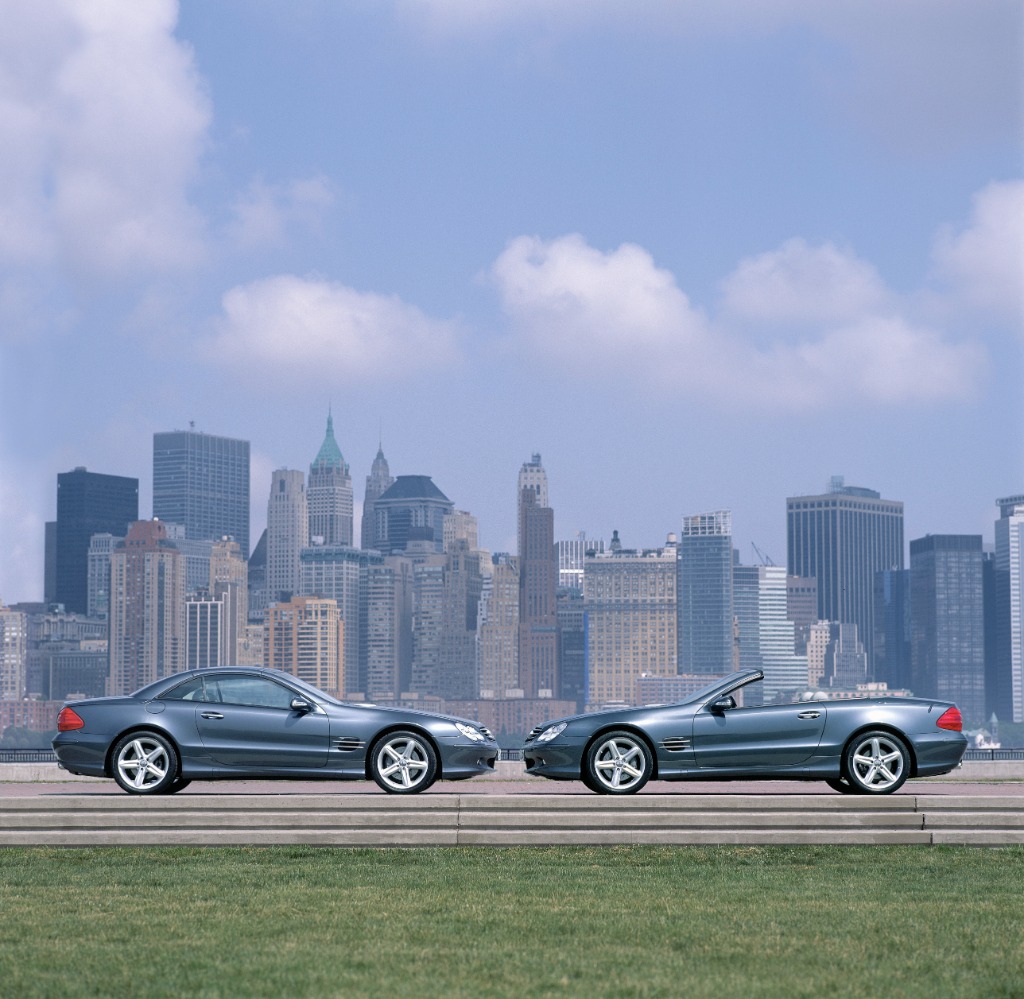
The Mercedes SL (R230) in coupe and roadster modes: grand touring prestige and road presence juxtaposed against the SLK’s compact athletic footprint.
Source: © Mercedes-Benz AG
While the SL boasts unmatched presence, richer interior appointments, and effortless autobahn dominance, the financial liabilities demand extreme caution:
- The Active Body Control (ABC) Pitfall: Standard on SL 55 AMG and SL 500 models, the high-pressure hydraulic ABC suspension ranks among the most expensive maintenance liabilities in modern automotive history. Tandem pump failures, deteriorating high-pressure hoses, leaking valve blocks, and blown hydraulic struts regularly generate repair bills between $3,500 and $7,000.
- Sensotronic Brake Control (SBC): The electrohydraulic brake pump enforces a programmed service-cycle limit, necessitating expensive dealer replacement once reached.
- Weight Penalty: Weighing roughly 4,400 lb (2,000 kg), the SL is a majestic transcontinental cruiser rather than a playful sports car like the 3,395-lb SLK 55.
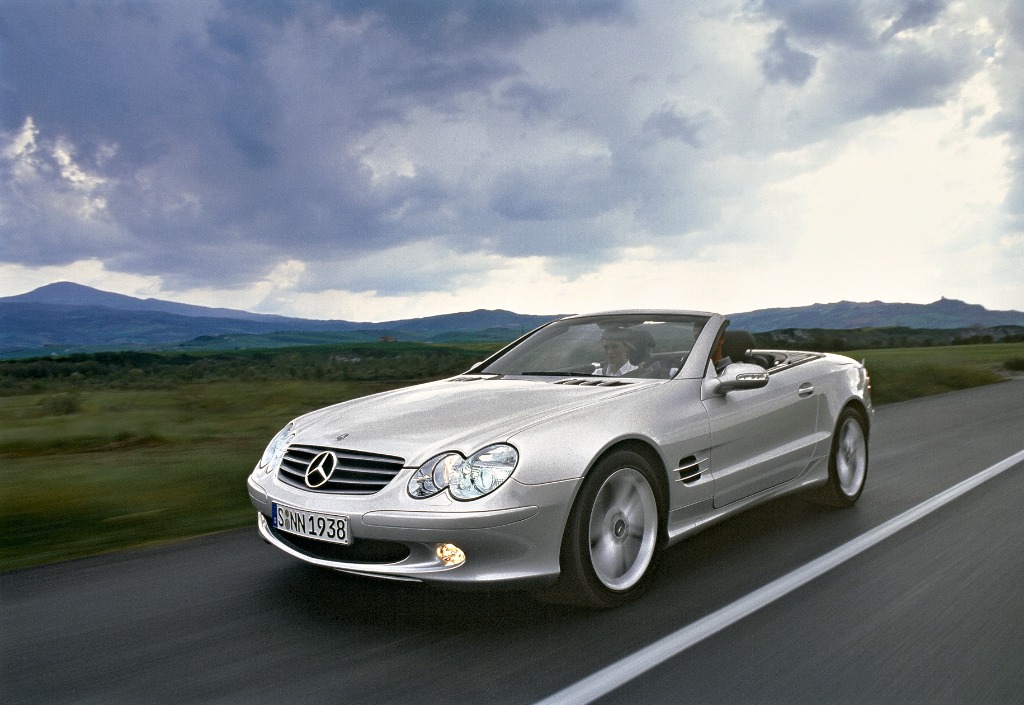
The SL R230 on the road: supreme ride comfort and status, accompanied by hydraulic complexity and maintenance liabilities that dwarf the SLK 55.
Source: © Mercedes-Benz AG
[!TIP] Why the SLK 55 AMG is the Rational Choice:
Lacking ABC suspension (using dependable steel coils and shocks instead) and without SBC electrohydraulics, the SLK 55 AMG delivers 85% of the SL 55’s acoustic theater and muscle for half the long-term running costs. For weekend enjoyment without maintenance anxiety, the smaller roadster wins decisively.
3. Direct Succession: The Mercedes SLK 55 AMG (R172)
Introduced in 2012 as the successor to the R171, the third-generation SLK 55 AMG (chassis R172) pushed the V8 roadster concept to its engineering zenith. In retrospect, it stands as the last compact naturally aspirated V8 roadster in automotive history, with its replacement (the 2016 SLC 43 AMG) downsized to a 3.0-liter twin-turbo V6.
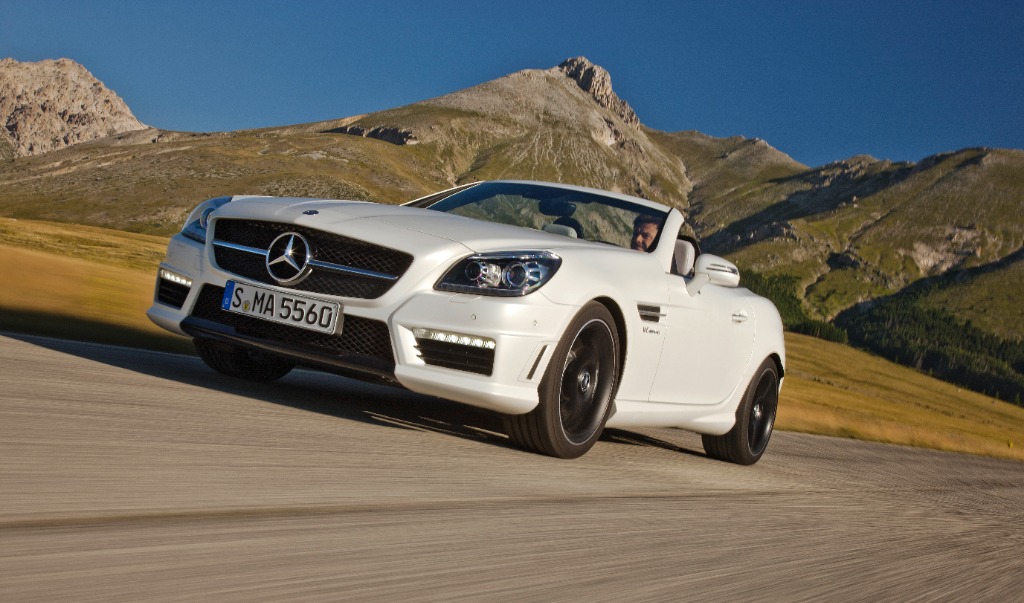
The R172 generation SLK 55 AMG: upright SLS AMG-inspired grille, angled headlights, and horizontal LED daytime running lights.
Source: © Mercedes-Benz AG
A. Tangible Dynamic and Technological Gains
From a purely mechanical standpoint, the R172 advanced several key metrics:
- The M152 V8 (415 hp / 421 PS & 398 lb-ft / 540 Nm): Developed directly from the 5.5L twin-turbo M157 (minus the turbochargers), this high-compression (12.6:1) direct-injected engine puts down 415 hp (421 PS) at 6,800 rpm and 398 lb-ft (540 Nm) at 4,500 rpm (+60 hp and +22 lb-ft over the R171), dropping the 0–60 mph dash to 4.4 seconds.
- AMG Speedshift Plus 7G-Tronic: Much crisper electronic programming with automated rev-matching on downshifts and an uncompromising Manual mode that refuses to upshift at the 7,200 rpm redline.
- Chassis Rigidity: Torsional stiffness improved by roughly 15%, eliminating minor cowl shake detected in early R171s under severe pavement bumps.
- Cylinder Deactivation Efficiency: AMG Cylinder Management cuts fuel and spark to cylinders 2, 3, 5, and 8 in Comfort mode between 800 and 3,600 rpm. Operating as a four-cylinder, it achieves over 28 mpg US (8.5 L/100 km) in steady highway cruising.
- SLS-Inspired Interior: The cockpit incorporates circular cross-hair aluminum vents borrowed from the SLS AMG supercar and offers the Magic Sky Control electrochromic glass panoramic roof.
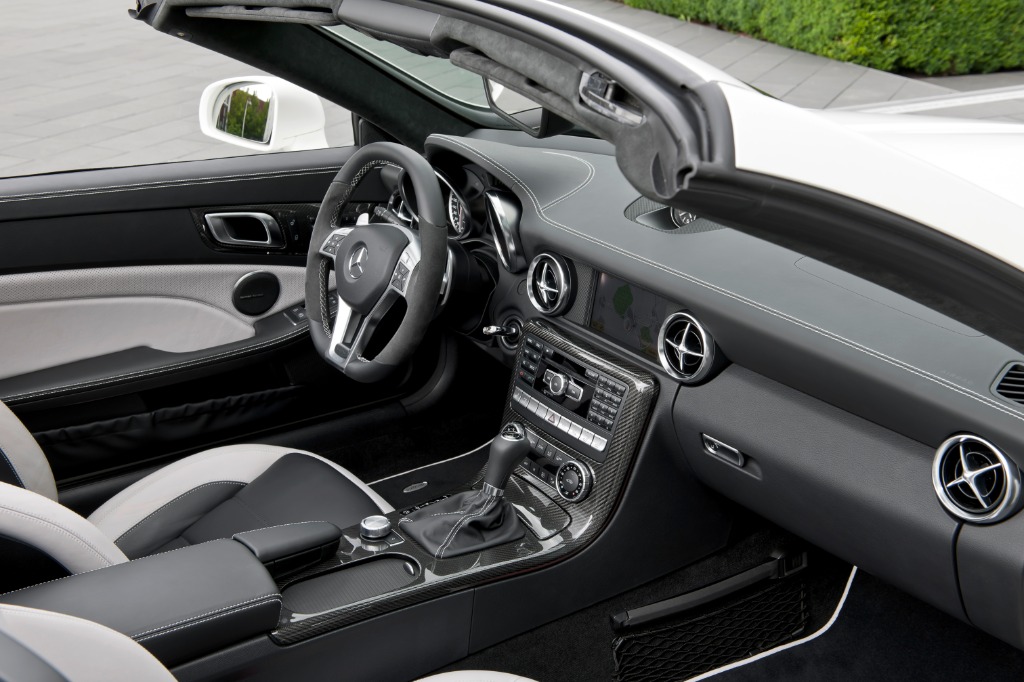
R172 cockpit: elevated material quality, genuine carbon-fiber console, SLS circular vents, and leather-and-suede sport wheel.
Source: © Mercedes-Benz AG
B. Muted Styling and Unfinished Depreciation
Despite its technical prowess, two key liabilities explain why the R171 remains the smarter investment target:
- Conservative Styling: Where the R171 pushed boundaries with its polarizing SLR-inspired F1 nose, the R172 retreated into corporate conservatism with an upright, boxy face heavily reminiscent of a contemporary W204 C-Class sedan. It lacks the distinctive visual edge that fuels early-collector appeal.
- Incomplete Depreciation: Trading between $38,000 and $52,000 (€38,000 – €50,000), the R172 has not yet found its historical valuation floor. At this price point, it faces fierce pressure from newer hardware like the Porsche Boxster 981 S, BMW M4 Convertible, and C63 AMG Coupe. Its price curve continues to soften slowly.
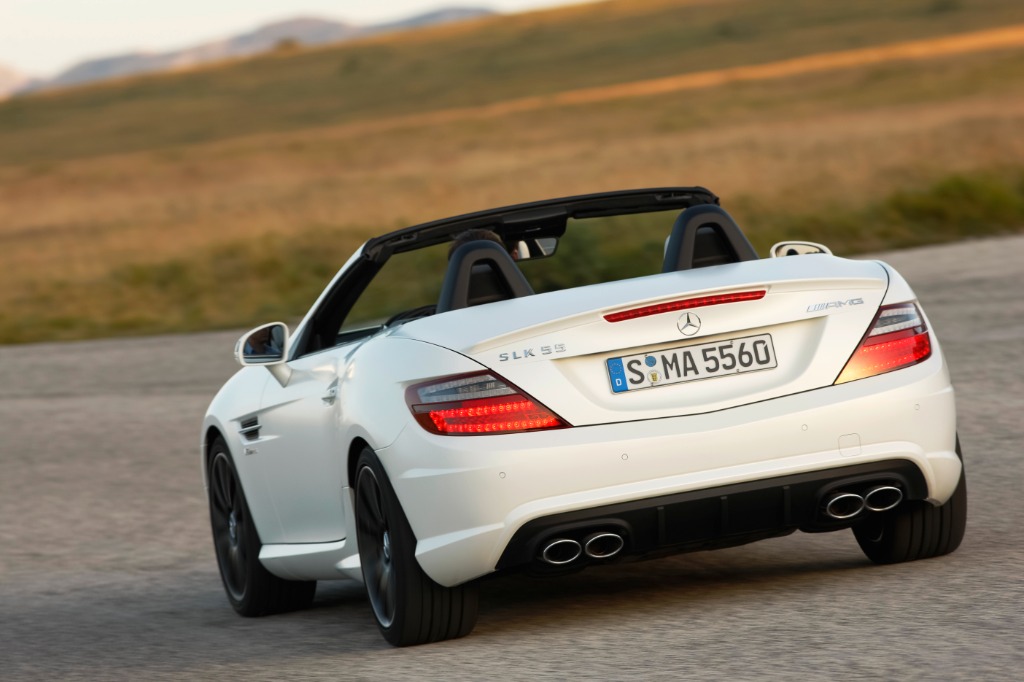
The tail of the SLK 55 AMG R172: horizontal LED lights and black rear apron framing active acoustic quad exhaust tips.
Source: © Mercedes-Benz AG
C. Specific Reliability Checklist for the R172
While the M152 V8 does not suffer from the head-bolt failures that afflicted early 6.2L M156 units, its technological sophistication introduces new checkpoints compared to the simpler M113:
- Oil Migration from Cam Adjuster Magnets:
- The Issue: Like the entire modular engine family (M276, M278, M157), the four camshaft phaser adjuster magnets and position sensors can develop micro-leaks through their plastic electrical pins.
- The Consequence: Engine oil wicks along the wiring harness into the primary Engine Control Unit (ECU), causing sensor shorts and catastrophic electronic failure.
- The Fix: Unplug all four front cam connectors during pre-purchase inspection to verify dry connections, and install preventative sacrificial isolation wiring harnesses (oil-blocker pigtails, under $50 for the set).
- Piezoelectric High-Pressure Direct Injectors (2,900 psi / 200 bar):
- Direct injection improves throttle bite but exposes injectors to carbon fouling and internal sticking. A leaking injector washes the oil film off cylinder walls, resulting in localized scuffing and bore scoring. Monitor short- and long-term fuel trim adaptations via diagnostic scan tools.
- Cylinder Deactivation Tappets:
- The AMG Cylinder Management mechanism uses hydraulic locking pins inside the valve lifters on cylinders 2, 3, 5, and 8. It demands strict oil viscosity adherence (genuine MB 229.5 specification) and conservative 5,000 to 7,500-mile (10,000 km) oil change intervals. Degraded oil can cause lifter ticking and delayed eight-cylinder re-engagement.
- Secondary Timing Chain Tensioners:
- On 2012–2013 builds, a brief 2- to 3-second metallic chain rattle on cold startup can occur. Mercedes-Benz issued a technical service bulletin outlining the installation of check valves behind the secondary chain tensioners to prevent oil drain-back during extended parking.
- Magic Sky Control Panoramic Roof:
- This electrochromic glass option is visually stunning, but electrical failure or glass delamination requires replacing the entire overhead panel, running between $3,500 and $5,000 at authorized dealers.
D. The mydriveROI Verdict on the R172: Why You Should Wait
At current market levels, the SLK 55 AMG (R172) is not our recommended buy, driven by two decisive factors:
- An Unfinished Depreciation Cycle: With price tags still floating between $38,000 and $50,000, the car has not yet bottomed out. It continues to lose ground against more specialized contemporary sports cars, exposing owners to ongoing depreciation.
- Aesthetic Purgatory: Its exterior styling is currently regarded as too modern and anonymous compared to the bold, unapologetic character of the R171.
[!IMPORTANT] The Classic Mercedes Timeline:
Automotive history shows that nearly all Mercedes-Benz models undergo a prolonged unloved transition phase before achieving collector recognition. With the passing of time and the extinction of naturally aspirated V8 engines, the R172’s status as the final naturally aspirated V8 compact roadster in history will inevitably trigger a collector renaissance. But until its price floor stabilizes, the analog R171 remains by far the safer, smarter financial proposition.
Conclusion: A Pragmatic Classic from AMG’s Golden Era
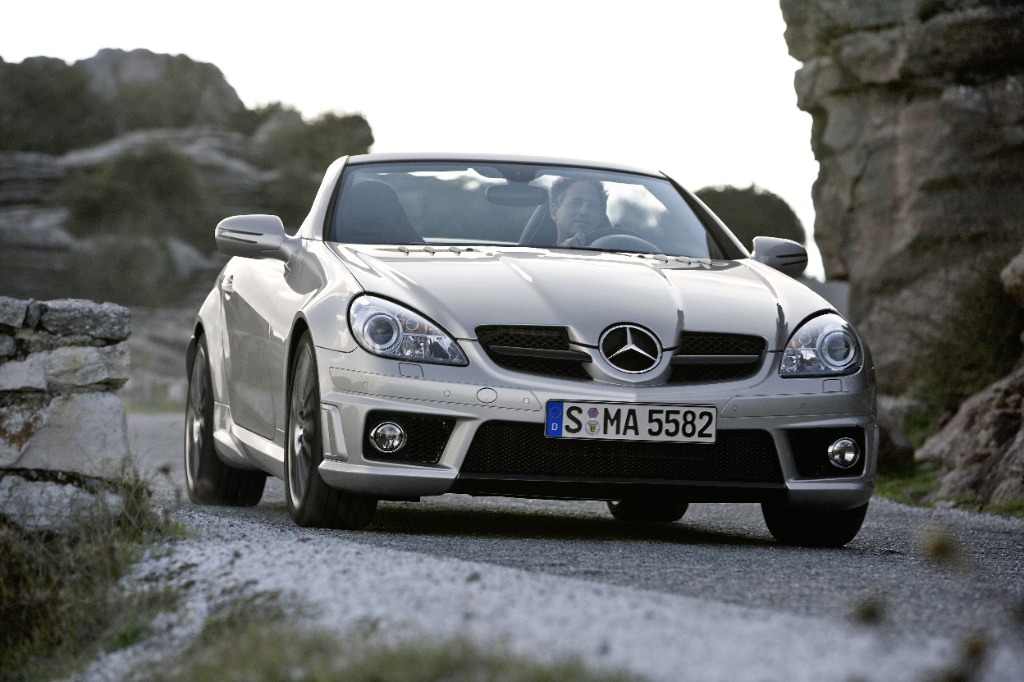
The SLK 55 AMG in its element: boundless mechanical torque and naturally aspirated open-air V8 exhilaration.
Source: © Mercedes-Benz AG
In the mid-2000s performance car landscape, the Mercedes SLK 55 AMG R171 holds a special place. It unites the maneuverability of a compact roadster, the all-weather practicality of a folding hardtop, and the effortless authority of a large 5.4-liter naturally aspirated V8.
Untroubled by the complex hydraulic suspensions and maintenance headaches of contemporaneous super-GTs, its conventional steel chassis and bulletproof M113 powerplant make it a remarkably rational passion purchase. Priced under $35,000 (€32,000) for a documented, collector-grade example, it offers an analog V8 experience that will never be replicated in modern showroom floors.
Car Evaluation
Evaluation Criteria
Appreciation Potential
Potential for value increase over time
"The SLK 55 AMG R171 completed its depreciation curve several years ago and now sits on a firm, gradually appreciating plateau for thoroughly documented cars. Enthusiast demand centers on its rare engineering formula: a large 5.4-liter naturally aspirated V8 packed into a compact retractable hardtop roadster. Factory P30 Performance Package cars command a noticeable market premium."
Ownership Cost
Total cost of ownership including maintenance, insurance, and running costs
"The naturally aspirated M113 is widely celebrated as one of AMG's most durable engines, untroubled by forced induction or direct injection complexities. Crucially, the SLK 55 avoids the costly Active Body Control (ABC) hydraulic suspension that burdens the SL 55 R230. Steel coil springs and the absence of the SBC brake-by-wire system keep routine maintenance overhead remarkably predictable."
Driving Pleasure
Pure driving enjoyment and emotional connection
"A distinct driving proposition blending a thunderous V8 rumble with 376 lb-ft (510 Nm) of immediate low-end torque. Although the 7G-Tronic transmission prioritizes smooth cruising over the razor-sharp shifts of modern dual-clutch units, the linear punch and charismatic exhaust note provide an engaging grand touring experience."
Market Liquidity
Ease of selling when needed
"Liquidity remains strong for stock, well-kept examples backed by comprehensive service records and verified mileage under 75,000 miles (120,000 km). Gray-market imports lacking provenance or cars exhibiting transmission or hydraulic roof faults face considerably longer marketing times."
Exclusivity & Rarity
How rare and exclusive the vehicle is
"With 9,541 units produced worldwide across six model years, overall production remained tight for a volume sports car. Cars equipped with the P30 Performance Package (around 1,000 units) and facelifted Phase 2 examples represent the most sought-after collector specifications."
Similar Cars
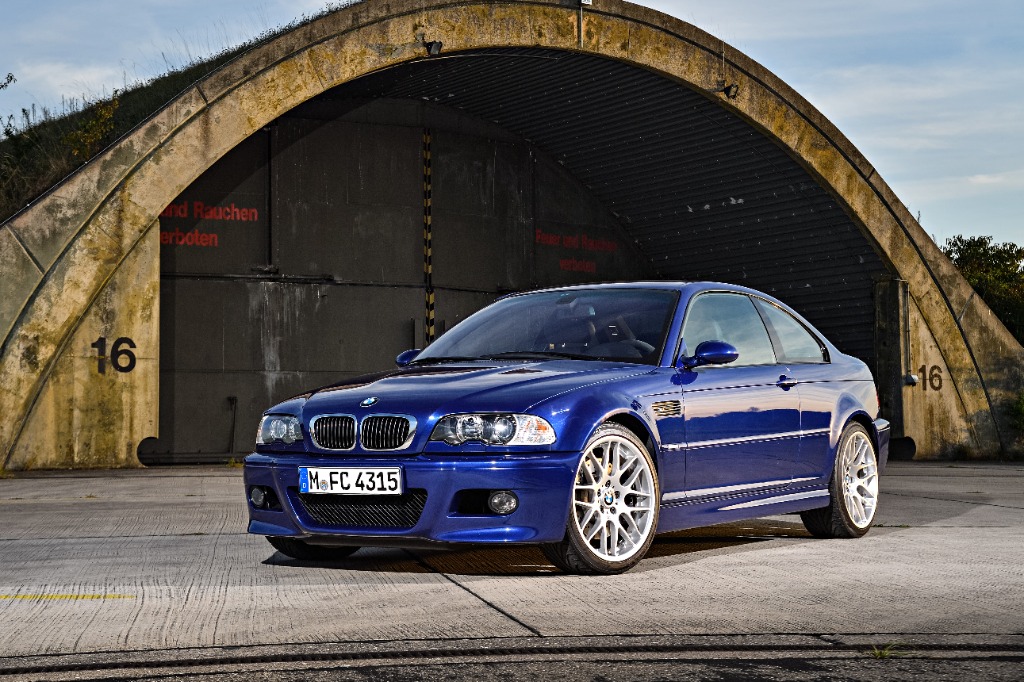
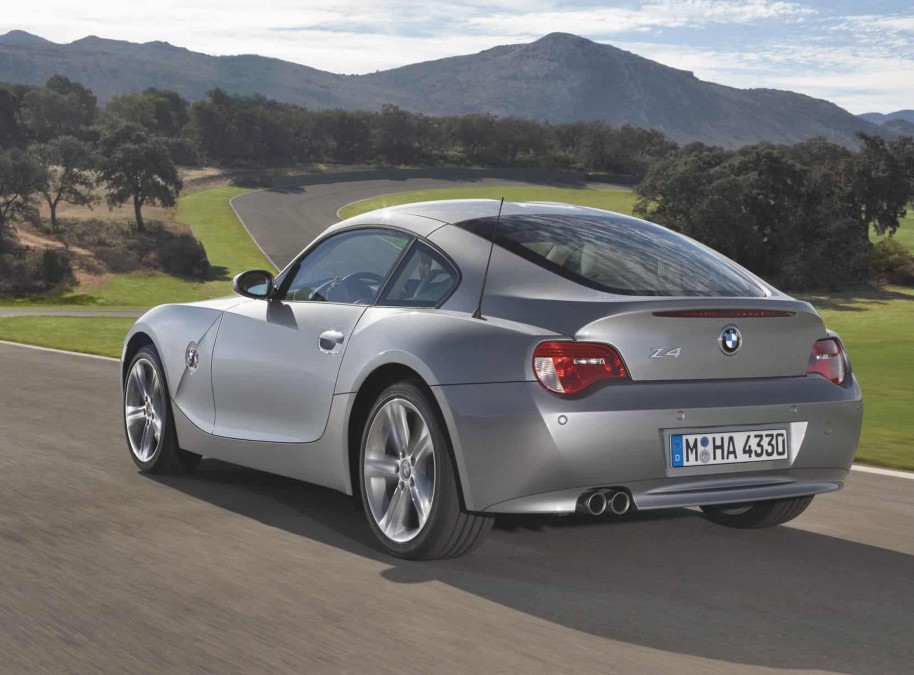
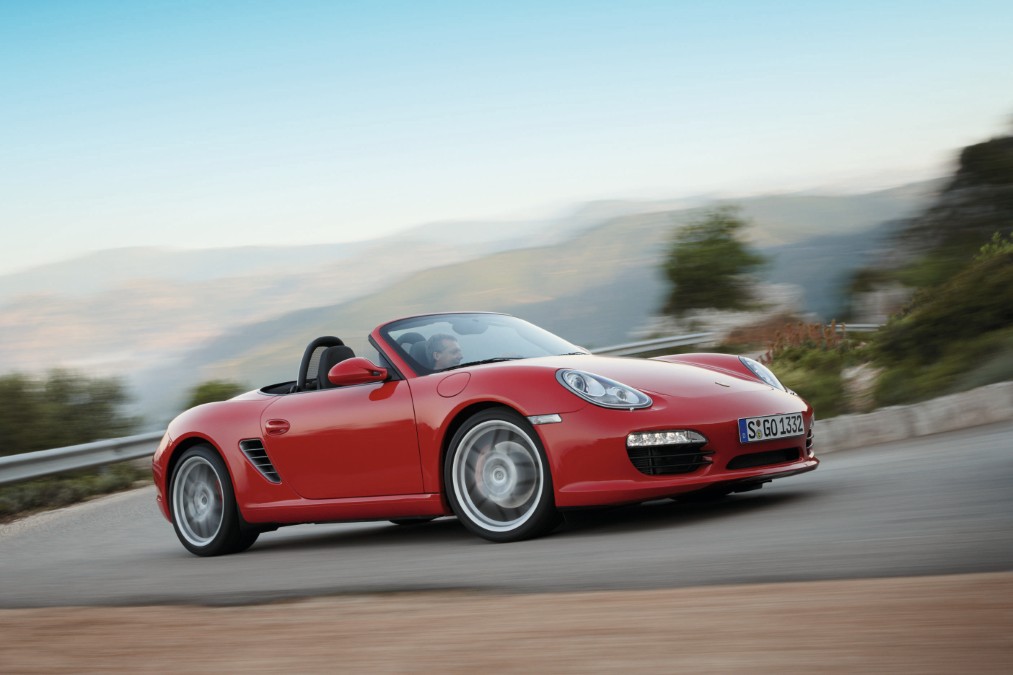
Porsche Boxster S 987.2 - The Ideal Boxster for Entering the Porsche Universe.
Porsche Boxster S 987.2
Related Articles